
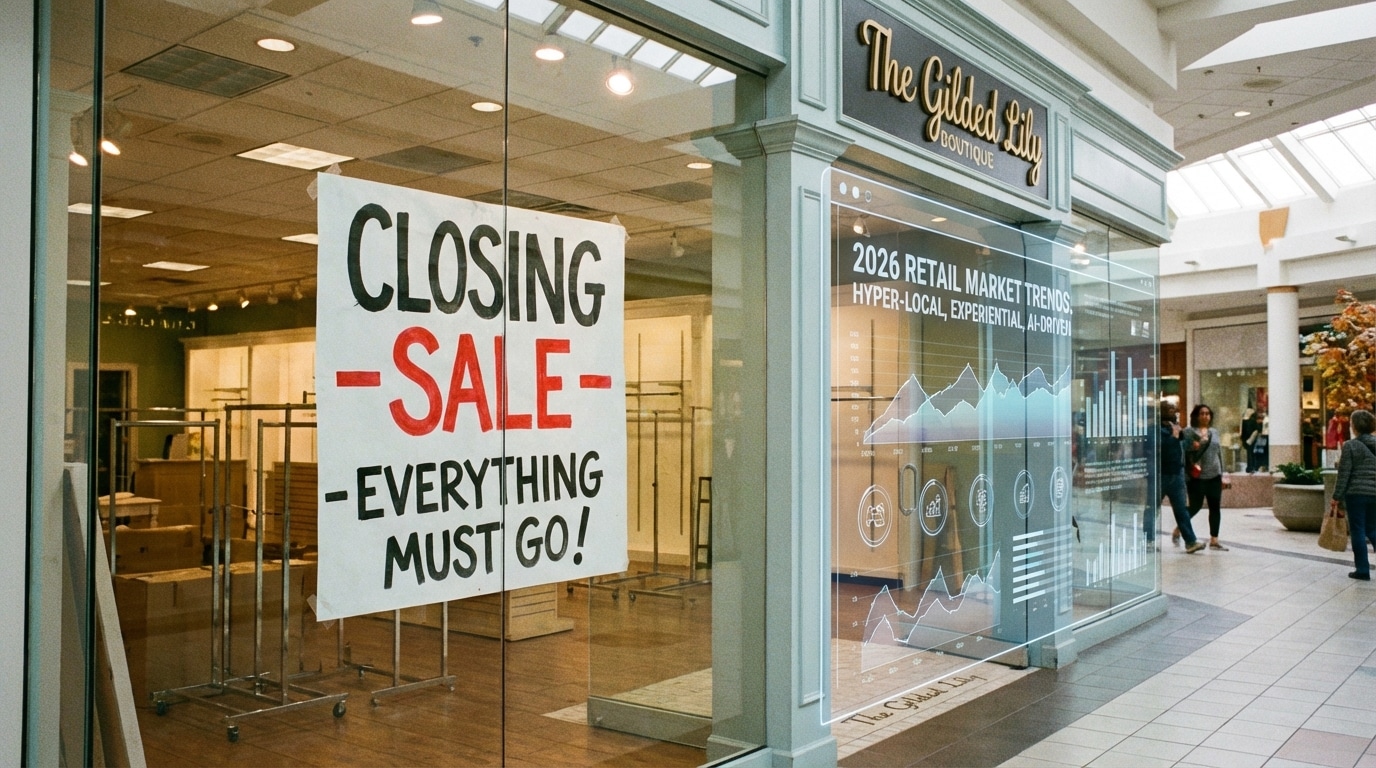
The retail landscape of 2026 is undergoing a seismic shift, particularly in the mid-Atlantic region. On January 19, 2026, reports surfaced that a prominent clothing retailer with stores in central Pa. is reportedly closing, joining a growing list of national brands scaling back their physical footprints. For the Central Pennsylvania community—spanning from the shopping hubs of Lancaster and York to the regional malls of Harrisburg and Altoona—these departures are not just a matter of convenience; they are a direct reflection of a high-interest rate economy and the rapid rise of “Value-Seeking” consumerism.
While many see store closures as a sign of economic distress, savvy investors view them as part of a “Structural Realignment.” Large-scale retail consolidation is creating a vacuum that is being rapidly filled by off-price leaders and discounters. Understanding the mechanics of these closures—specifically the reportedly imminent liquidation of Francesca’s and the regional exit of H&M—is essential for anyone managing a consumer-discretionary portfolio. This guide breaks down the latest reports, the financial catalysts behind the trend, and the wealth-preservation strategies you need to navigate the 2026 retail reset.
The 2026 “Retail Realignment”
The “Retail Apocalypse” of the early 2020s has evolved into a more calculated “Realignment.” In 2026, retailers are no longer closing stores due to a lack of customers, but rather due to a lack of “Margin Efficiency.” High labor costs and the 3.5% “sticky” inflation of the current cycle have made underperforming mall locations a liability for corporate balance sheets.
The Rise of “Boutique Liquidations”
The latest report regarding a clothing retailer with stores in central Pa. focuses on Francesca’s, the women’s boutique chain that has been a staple in Pennsylvania malls for over two decades. On January 19, 2026, industry reports confirmed that the chain is liquidating its inventory and closing boutiques across the country, including those in high-traffic Pennsylvania centers like the Park City Center in Lancaster and the West Shore Plaza. This move follows a period of intense pressure from unpaid vendors and a struggle to adapt to the “agentic” shopping habits of Gen Z consumers.
The “Anchor Loss” Effect in Central PA
When a brand like Macy’s or a trendy “mini-anchor” like H&M closes, it creates a “hollowing out” effect in regional malls. The January 2026 announcement that H&M is closing its Logan Valley Mall location in Altoona on January 18 is a prime example. For a regional shopping center, the loss of a major fashion exit means less foot traffic for the remaining tenants, potentially triggering a “lease-break” cycle. From a wealth-building perspective, this shift highlights the risk of over-concentration in traditional mall REITs (Real Estate Investment Trusts) and the opportunity in “Power Center” assets that house resilient, value-oriented brands.
Navigating the Retail Shift
To protect your wealth and identify growth opportunities in 2026, you must look past the “Store Closing” signs and analyze the “Supply Side” of the equation. While some brands are shrinking, others are doubling down on the Central PA market.
Identifying the “Value-Seeking” Winners
As the mid-tier clothing retailer with stores in central Pa. closes its doors, consumers are “trading down” to off-price retailers. Companies like Ollie’s Bargain Outlet (headquartered right here in Pennsylvania) and Burlington are aggressively expanding their footprints in 2026.
- Analyze Capital Expenditure (CapEx): Look for retailers that are reinvesting in “Smaller-Format” stores. Macy’s, for instance, is closing massive mall anchors like the Galleria at Pittsburgh Mills but opening “Market by Macy’s” locations in high-income suburbs.
- Monitor “EVM” Sidechains in Retail: Many 2026 retailers are using blockchain technology to track supply chains. Brands that can demonstrate “real-time traceability” are gaining a trust-premium from consumers.
Tactical Real Estate Rebalancing
If you hold investments in commercial real estate or retail-heavy funds, 2026 is the year to rebalance.
- Avoid “B-Tier” Malls: The report of Francesca’s closing underscores the danger of malls that rely on niche boutiques.
- Prioritize “Service-Integrated” Centers: Centers that include grocery anchors (like the expanding Giant Food Stores in Central PA) and health services (like Concentra or MedExpress) are showing significantly higher occupancy resilience.
Actionable Steps for PA Investors:
- Verify Gift Card Balances: If you hold gift cards for Francesca’s or other reportedly closing retailers, spend them immediately. As of January 14, 2026, many closing brands have moved to an “All Sales Final” policy.
- Track “Dark Store” Redvelopments: Former anchor spaces in Central PA are being converted into “Netflix House” entertainment centers or high-tech medical offices. These “adaptive reuse” projects are prime targets for regional development capital.
- Monitor the 10-Year Treasury Yield: Rising yields in 2026 continue to pressure retail valuations. If the 10-year yield spikes above 4.5%, expect another wave of bankruptcy filings in Q2.
Dow, S&P 500, Nasdaq Sink as Trump Tariff Threats and Bond Sell-off Rattle Nerves
The Central PA Retail Divergence
To understand the clothing retailer with stores in central Pa. story, we must compare the losers with the local winners. Pennsylvania is a unique market where “Value” is the primary currency.
The “Value” Trade in 2026
Imagine two retail portfolios in 2026. Portfolio A is heavy in traditional mall staples (Macy’s, Express, Francesca’s). Portfolio B is focused on Pennsylvania-based “Efficiency Leaders” like Ollie’s and value giants like Costco.
| Metric | Portfolio A (Traditional Mall) | Portfolio B (Value/Power Center) |
| Occupancy Risk | High (5+ closures in PA malls) | Low (Strategic site acquisition) |
| Dividend Yield | 4.2% (Risk of cut) | 3.1% (Growth-oriented) |
| Exposure to “GLP-1” Trend | Slow to adapt to size shifts | Rapidly pivoting to wellness/food |
| 2026 Performance | -8% (Negative sentiment) | +12% (Consumer “Trade-Down” bid) |
Real-Life Application: The “House of Sport” Pivot
While Foot Locker is reportedly “cleaning out the garage” by closing underperforming stores in 2026, its parent-adjacent entity, Dick’s Sporting Goods, is thriving by launching massive “House of Sport” destinations. This highlights the “Bigger is Better” or “Nicher is Better” dichotomy of 2026. You either want to be a massive destination or a hyper-efficient value shop. The middle ground—where most closing clothing retailers in Central PA reside—is the “Dead Zone.”
According to the 2026 Retail Industry Global Outlook by Deloitte, nearly 70% of retail executives agree that “value-seeking” is a structural change, not a temporary response. This reinforces the idea that the closure of a clothing retailer with stores in central Pa. is an inevitable outcome of a more discerning, cost-conscious consumer.
Common Mistakes and Risks to Avoid
- Buying the “Liquidation Trap”: Investing in a stock just because it is closing stores “to save money.” Store closures are often a symptom of underlying insolvency, not a cure for it.
- Underestimating the “Greenland” Tariff Impact: In early 2026, President Trump’s tariff threats against European nations (like Denmark/Sweden) have significantly raised the cost for fast-fashion brands like H&M. Failure to account for “Supply Chain Volatility” in 2026 is a major analytical blind spot.
- Ignoring the “GLP-1” Effect: Millions of Americans are losing weight rapidly due to obesity drugs. Retailers that haven’t adjusted their “size assortments” by 2026 are facing massive inventory bloat in larger sizes.
- Assuming All Malls are Dying: King of Prussia and other “Destination Malls” are actually thriving by adding entertainment components like Netflix House.
- Neglecting Local “Zoning Hurdles”: Many Central PA malls are struggling to redevelop empty spaces due to strict local zoning laws. Ensure your REIT investments have “Active Management” that can navigate these hurdles.
Conclusion – Key Takeaways & Next Steps
The news of a clothing retailer with stores in central Pa. reportedly closing—likely Francesca’s or the regional H&M exits—marks a pivotal moment in the 2026 “Retail Realignment.” While the “hollowing out” of regional malls can be unsettling for local shoppers, it represents a necessary cleaning of the economic pipes. By shifting your focus toward value-centric leaders like Ollie’s and “Destination Retailers” that offer multisensory experiences, you can build a portfolio that thrives in this new era of consumption.
Stability in 2026 is found in “Integrated Value.” The retailers that can provide high-quality goods at fair prices while leveraging AI for supply chain efficiency are the ones that will win the year.
Would you like me to help you analyze the “Store Closure Risk” of other specific retailers in your Central PA portfolio? Explore our further resources to stay updated on the latest wealth-building strategies and retail trends for 2026.





3 Comments