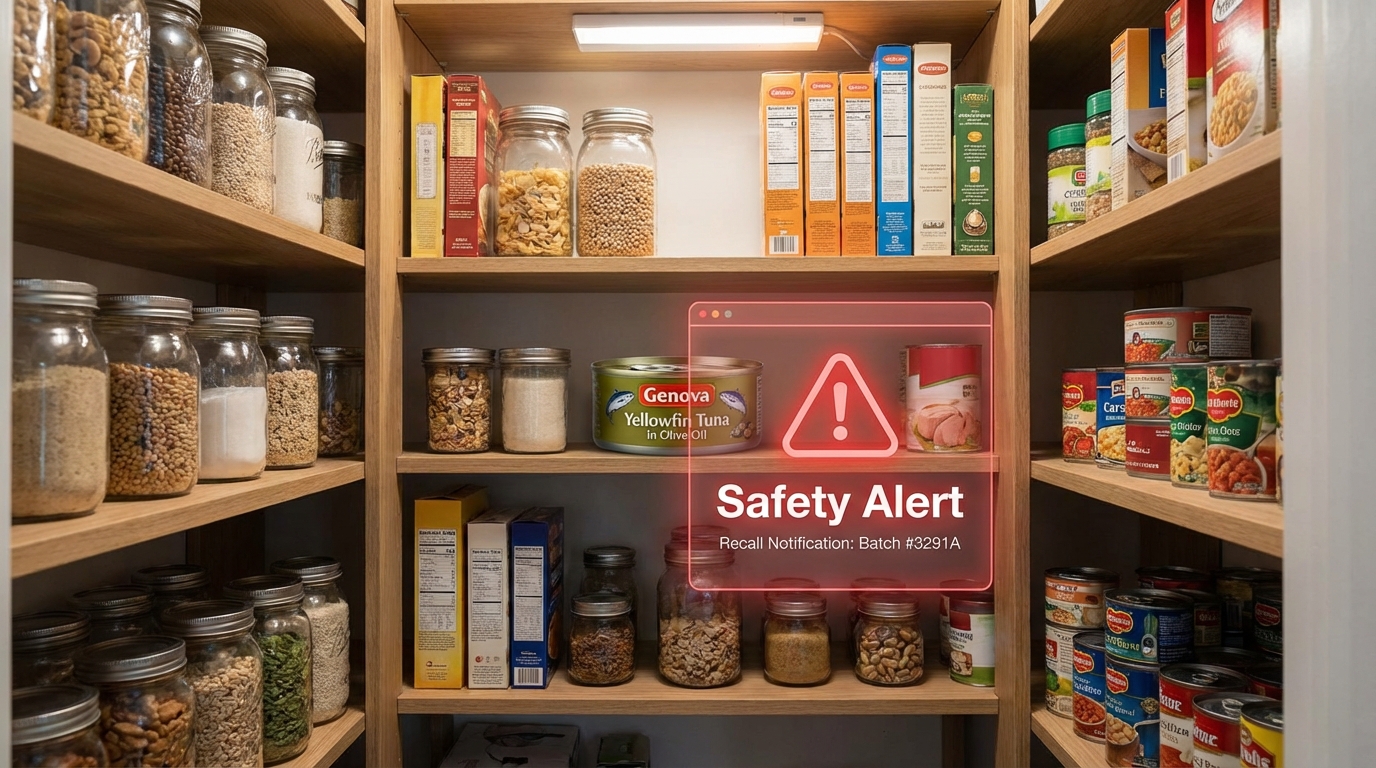
The safety of our global food supply is often taken for granted until a major disruption hits the headlines. In recent days, the Tuna Recall January 2026 has emerged as a significant concern for both consumers and investors. Triggered by a massive logistical failure, Tri-Union Seafoods has identified that thousands of cans of its premium Genova® brand were inadvertently shipped to retail shelves despite being under a strict quarantine. For anyone managing a household budget or a diversified investment portfolio, understanding the implications of this event is essential to navigating the risks inherent in the consumer staples sector this year.
The Anatomy of the Tuna Recall January 2026
To understand why the Tuna Recall January 2026 is causing such alarm, we must look at the specific failure that led to this event. Unlike many recalls that result from a new discovery of contamination, this situation is the result of a “secondary distribution error” involving products that were already known to be dangerous.
The Breakdown in Logistics
The products involved were originally part of a voluntary recall in February 2025 due to a manufacturing defect in the “easy open” pull-tab lids. These lids were found to potentially lose their seal over time, which can lead to spoilage or, more seriously, contamination with Clostridium botulinum. While Tri-Union Seafoods had quarantined these items, a third-party distributor mistakenly released them to retailers across nine states in early 2026. This highlight a critical vulnerability in modern “just-in-time” supply chains: the reliance on digital inventory firewalls that can, and do, fail.
Health Risks: The Botulism Threat
The primary health concern cited in the Tuna Recall January 2026 is foodborne botulism. This is a rare but potentially fatal form of food poisoning caused by a potent neurotoxin. The FDA warns that the toxin can develop in cans that show no outward signs of spoilage, such as bulging or foul odors.
Symptoms to watch for include:
- Double or blurred vision
- Drooping eyelids and slurred speech
- Difficulty swallowing or breathing
- Progressive muscle weakness
Practical Strategies: Evaluating Brand Risk in 2026
For the proactive investor, a major event like the Tuna Recall January 2026 provides a clear framework for assessing “safety risk” within a portfolio. While consumer defensive stocks are often seen as a safe haven during market volatility, operational failures can turn a stable dividend payer into a liability overnight.
1. Assessing Supply Chain Integrity
When evaluating food and beverage companies, you must look beyond their marketing. The current crisis proves that the “weakest link” is often the third-party logistics (3PL) provider.
- Actionable Step: Research a company’s investment in blockchain-based traceability. Firms that use immutable ledgers for every pallet of product are significantly less likely to experience “inadvertent distribution” errors.
2. Monitoring Brand Equity Erosion
A single recall can cost a company millions in direct expenses, but the long-term damage to brand equity is often much higher. In 2026, where consumer sentiment is driven by real-time social media alerts, the speed of a company’s response is the primary determinant of its recovery.
- Actionable Step: Watch for how the parent company, Thai Union Group, manages the PR fallout. If they offer transparent, 1-click retrieval kits and generous coupons, they may preserve enough customer loyalty to avoid a long-term dip in market share.
Central PA Retail Closures 2026
Market Scenario: The Financial Cost of Botulism Risks
To quantify the impact of the Tuna Recall January 2026, let’s examine a hypothetical scenario for a mid-sized seafood parent company facing a Class I recall of this magnitude.
| Cost Component | Estimated Impact | Rationale |
| Direct Retrieval & Disposal | $10 Million | The average direct cost of a food recall according to industry standards. |
| Retailer Penalties | $3 Million | Fines and fees charged by major chains for shelf-space disruption. |
| Legal & Regulatory Liability | $15 Million | Potential fines from the FDA and reserves for class-action lawsuits. |
| Market Cap Erosion | $50 Million+ | Short-term sell-off as investors price in reputational damage. |
This table illustrates that the direct cost of the tuna is often the smallest part of the total loss. For a retail investor, the Tuna Recall January 2026 is a reminder that in the 2025–2026 economic environment, brand trust is an intangible asset with a very tangible price tag.
Common Mistakes and Risks to Avoid
- Chasing “Unsafe” Yields: Do not buy the dip on a company suffering from repeated safety failures. A high dividend yield is a “value trap” if the company is cutting corners on quality control.
- Ignoring UPC Codes: Consumers often check the brand but ignore the specific codes. For the Tuna Recall January 2026, you must check UPCs 4800073265 and 4800013275 specifically.
- Relying on “The Smell Test”: Botulism toxins do not always change the appearance or smell of food. If your can matches the recall codes, do not open it.
- Underestimating the FDA: Major recalls often lead to unannounced facility inspections. (External link: Official FDA Recall Notice) reveals the geographical extent of this event.
Conclusion – Key Takeaways & Next Steps
The Tuna Recall January 2026 is a pivotal moment for the consumer staples sector this year. It serves as a stark reminder that in our hyper-connected economy, the “integrity of the seal” is both a health requirement and a financial fundamental. Whether you are checking your pantry or your brokerage account, the lesson remains the same: diligence is your best defense against systemic failure.
Wealth building in 2026 requires looking beyond the P/E ratio and into the actual “pipes” of the supply chain. By focusing on companies that lead in safety technology and maintain strict oversight of their third-party partners, you can ensure your portfolio remains as resilient as the networks it tracks.
What is your next step to secure your holdings?
Start by auditing your pantry for any Genova products and verifying them against the codes listed above. Would you like me to create a “Supply Chain Risk Scorecard” to help you evaluate the safety protocols of other food stocks in your portfolio?