
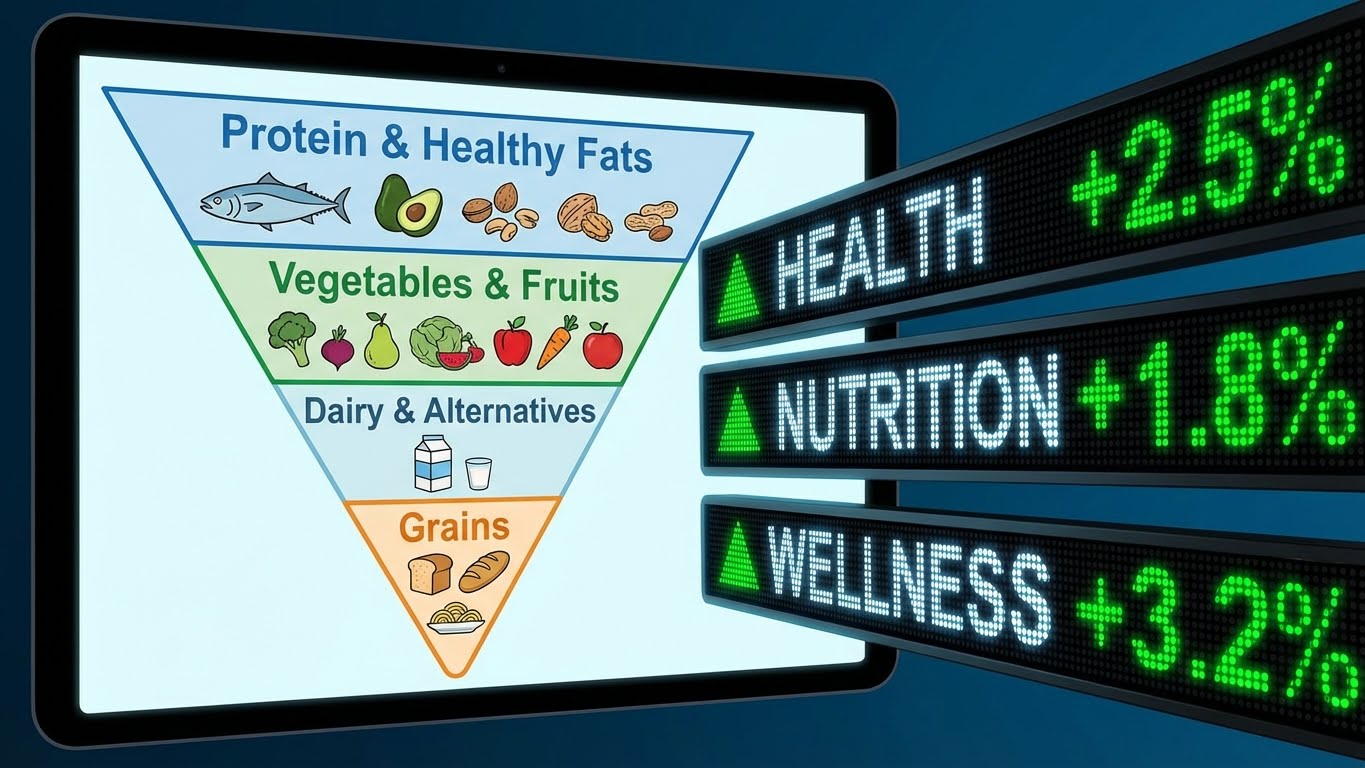
The dawn of 2026 has brought a seismic shift to the American dinner table and the nation’s financial outlook. On January 7, 2026, the USDA and HHS unveiled a historic reset of federal nutrition policy with the release of the 2025-2030 Dietary Guidelines for Americans. Commonly referred to as the Food Pyramid 2026, this update represents a radical departure from decades of dietary advice. By moving away from ultra-processed staples and re-centering “real food,” these guidelines are not just changing what we eat; they are reshaping the multibillion-dollar food industry and the healthcare economy. This transition raises the crucial question: Rich or Hungry? The 2026 Pyramid Reveals All.
For investors and health-conscious consumers alike, understanding the implications of the Food Pyramid 2026 is essential. This new focus on nutrient density, high-quality proteins, and healthy fats is creating massive ripples in consumer staples stocks and agricultural commodities. As the federal government pivots its procurement for school lunches and assistance programs, the financial consequences are as significant as the health outcomes. This guide breaks down the core components of the 2026 nutrition overhaul and provides actionable investment strategies for this new era.
The “Real Food” Revolution
The Food Pyramid 2026 is built on a single, uncompromising principle: Eat Real Food. This “historic reset” effectively ends the era of heavy reliance on refined carbohydrates and ultra-processed food (UPF) substitutes. Instead of focusing solely on calorie counting, the 2025-2030 guidelines prioritize the quality and source of those calories to combat chronic diseases like Type 2 diabetes and metabolic syndrome.
The Inversion of the Nutritional Hierarchy
One of the most striking changes in the Food Pyramid 2026 is its structural “inversion.” For decades, the base of the pyramid was dominated by grains and cereals. The new 2026 model flips this on its head, elevating high-quality proteins—including meat, poultry, eggs, and seafood—alongside nutrient-dense vegetables and healthy fats to the top priority. Whole grains have been moved to a smaller, supplementary role, emphasizing that they should be consumed in their least processed forms.
Ending the War on Healthy Fats
In a stunning reversal of 1990s-era “low-fat” dogma, the new guidelines “end the war on healthy fats” from whole food sources. The 2026 framework recommends full-fat dairy, butter, and even beef tallow as viable options for home cooking. This shift acknowledges that the chemical processing required to create low-fat versions often involves adding sugars or thickeners that negatively impact gut health. This policy change is expected to drive significant growth in the dairy and livestock sectors throughout 2026.
7 AI Trading Tools That Save You 10 Hours of Trading Daily
Navigating the 2026 Food Economy
Adapting to the Food Pyramid 2026 requires both a change in your grocery list and a rethink of your investment portfolio. As the $1.5 trillion U.S. food sector reacts to these guidelines, capital is flowing away from traditional “Big Food” manufacturers and toward regenerative agriculture and “clean label” innovators.
Rebalancing Your Consumer Staples Portfolio
The 2026 guidelines take a hard stance against ultra-processed foods, which currently make up a significant portion of many major food conglomerates’ revenue.
- Identify “Clean Label” Leaders: Look for companies that are aggressively simplifying their ingredient lists and removing artificial dyes, preservatives, and added sugars.
- Watch Federal Procurement Shifts: The National School Lunch Program, which feeds 30 million children, will begin aligning with these standards. Companies that cannot provide high-protein, low-sugar options may lose massive government contracts by 2027.
- Invest in Regenerative Agriculture: As the demand for “real food” and grass-fed proteins increases, agricultural technology firms and land-REITs focused on sustainable livestock management are poised for a 2026 breakout.
Budgeting for Nutrient Density
While “real food” can sometimes carry a higher upfront price tag, the Food Pyramid 2026 emphasizes long-term financial health by reducing healthcare liabilities.
- Prioritize Protein and Healthy Fats: With the new protein goal of 1.2–1.6g per kilogram of body weight, buying in bulk for meats and eggs can mitigate the rising costs of these staples.
- Leverage Frozen Real Foods: Frozen vegetables and fruits are encouraged as nutrient-dense alternatives to canned goods that may contain added sodium or syrups.
- Audit “Health Wash” Products: Be wary of products marketed as “high-protein” that are still highly processed. The 2026 guidelines urge consumers to look for “single-ingredient” labels whenever possible.
Summary of Key Guideline Changes for 2026
| Category | New 2026 Guideline | Previous Standard (2020-2025) |
| Added Sugars | < 10g per meal; none for children | < 10% of total daily calories |
| Dairy | Full-fat dairy encouraged | Fat-free or low-fat (1%) only |
| Grains | Secondary to protein/veg | Base of the dietary pattern |
| Protein Intake | 1.2–1.6 grams per kg of body weight | 0.8 grams per kg of body weight |
| Healthy Fats | Butter, tallow, and olive oil | Primarily vegetable/seed oils |
Verizon Outages Impact on Telecom Stocks
Economic Impacts and Market Trends
To illustrate the impact of the Food Pyramid 2026, we can examine how consumer behavior and institutional investment are already shifting in the first quarter of the year.
Scenario: The “Proteinification” of Menus
Major corporate brands like Starbucks and Chipotle have already begun pivoting their 2026 menus to meet the new demand for high-protein, low-sugar options. In early January, Starbucks launched “protein lattes” featuring higher-quality dairy and collagen, while Chipotle introduced a “MAHA” (Make America Healthy Again) menu focusing on steak and adobo chicken. These shifts suggest that companies that align with the Food Pyramid 2026 early will capture the “health-conscious” wallet of 2026.
Market Trend: The Growth of Gut-Health Stocks
The 2026 guidelines place unprecedented emphasis on the gut microbiome. This has led to a surge in interest for companies producing fermented foods, high-fiber staples, and probiotic supplements. According to the World Bank’s latest report on global nutrition, improving metabolic health is the most effective way to lower national healthcare expenditures. Consequently, institutional investors are increasingly viewing “gut-health” as a defensive sector that is resilient to broader market volatility.
Common Mistakes and Risks to Avoid
- Falling for “Artificial” Substitutes: The Food Pyramid 2026 explicitly advises against non-nutritive sweeteners and artificial additives. Investors should be cautious of “Zero Sugar” brands that rely on chemical sweeteners.
- Ignoring the Transition Period: While the new guidelines are out, federal programs like SNAP and WIC will take until 2027 to fully implement these changes. Do not expect an overnight collapse of traditional snack food stocks.
- Underestimating the Cost of Real Food: For those on a tight budget, the shift to a protein-heavy diet can be challenging. Failure to utilize “staple” proteins like eggs and legumes could lead to budget overruns in a high-inflation environment.
- Chasing Hype over Science: Many “fringe” products will claim to be “2026 compliant.” Always verify a company’s ingredient list and manufacturing processes before investing.
Conclusion – Key Takeaways & Next Steps
The release of the Food Pyramid 2026 represents a turning point in American public health and economics. By pivoting toward whole, nutrient-dense foods and “declaring war” on added sugars, the USDA and HHS are attempting to rewrite the nation’s health trajectory. For the individual, this is an opportunity to reduce long-term healthcare liabilities by investing in “real food” today. For the investor, it is a signal to re-evaluate the resilience of “Big Food” in a world that is increasingly demanding transparency and metabolic health.
Ultimately, stability in 2026 is found in “Real Food.” Reiterate your commitment to your health and your portfolio by staying informed on these evolving standards.
Would you like me to help you analyze the financial reports of specific food manufacturers to see how they are adapting their product lines for the Food Pyramid 2026? Explore our further resources to stay ahead of the curve in this rapidly evolving market.





2 Comments