
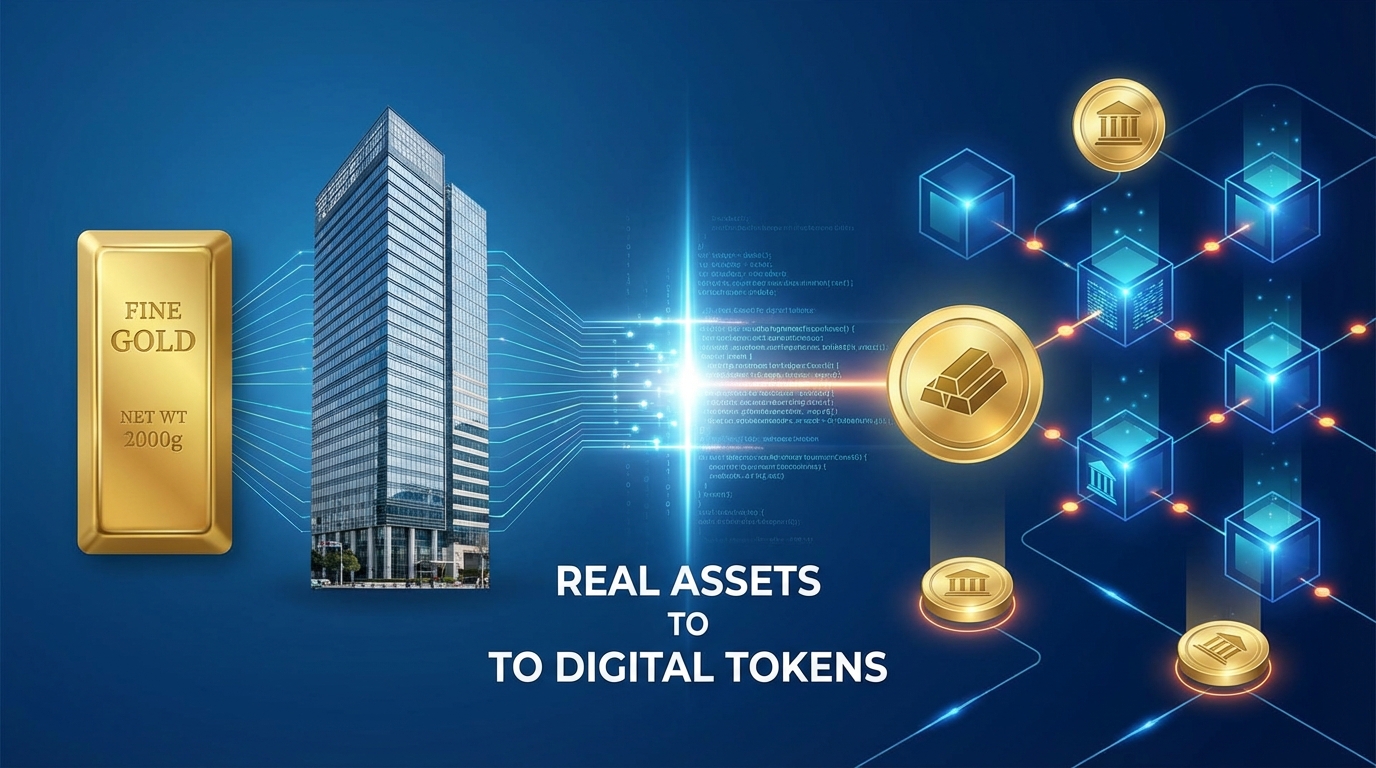
As we move deeper into 2026, the global financial architecture is undergoing its most significant transformation since the invention of the internet. At the heart of this shift are tokenized real-world assets (RWAs), which have successfully migrated from experimental pilots to a multi-trillion-dollar cornerstone of modern portfolios. By converting physical and traditional financial assets—such as real estate, private credit, and government bonds—into digital tokens on a blockchain, the market has unlocked unprecedented levels of liquidity and accessibility. For the forward-thinking investor, tokenized real-world assets (RWAs) represent a bridge between the stability of traditional finance and the efficiency of decentralized technology.
Understanding this asset class is no longer optional for those aiming to build lasting wealth. The 2026 economic environment, characterized by increased regulatory clarity and institutional adoption from giants like BlackRock and Franklin Templeton, has made RWA tokenization the standard for asset management. In this comprehensive guide, we will explore the core concepts, practical investment strategies, and the risks you must navigate to capitalize on the tokenized real-world assets (RWAs) boom.
What Are Tokenized Real-World Assets (RWAs)?
To grasp the power of this technology, we must define the fundamental shift it represents. A tokenized real-world asset (RWA) is essentially a digital twin of a physical or traditional financial asset. Instead of holding a paper deed or a physical certificate, your ownership is recorded as a cryptographically secured token on a distributed ledger. This allows for the “fractionalization” of value, meaning a $100 million office building can be divided into a million tokens, each representing a $100 stake.
The Shift from Manual to Programmable Finance
Traditional finance (TradFi) is often plagued by “siloed” systems, high intermediary costs, and slow settlement times. Tokenization replaces these frictions with smart contracts—self-executing code that automatically handles compliance, dividend distributions, and ownership transfers. In 2026, the tokenized real-world assets (RWAs) market has matured to include not just “on-chain” versions of Treasuries, but also complex private credit facilities and energy-producing assets like solar farms.
Enhanced Liquidity and 24/7 Global Markets
One of the most profound benefits of RWAs is the creation of a secondary market for traditionally illiquid assets. Historically, if you owned a piece of private equity or a commercial property, selling your stake could take months. Now, these assets can be traded on digital platforms 24/7. This liquidity premium is a primary reason why institutional capital has flooded into tokenized real-world assets (RWAs), as it allows for more dynamic portfolio rebalancing in a fast-moving economy.
Practical Strategies: Investing in the RWA Era
Navigating the 2026 RWA landscape requires a shift from “crypto-native” speculation to “asset-native” fundamental analysis. You are no longer just buying a token; you are buying the legal right to a cash-generating asset.
Identifying High-Yield Opportunities in 2026
While tokenized U.S. Treasuries dominated the early RWA market, the 2026 cycle is focused on yield-bearing alternative assets.
- Tokenized Private Credit: Many investors are now accessing the private lending market through platforms that pool capital to lend to small businesses or real estate developers. These often offer higher yields than traditional fixed-income products.
Framework for Evaluating RWA Platforms
Before committing capital, you must perform due diligence on the “issuance rail” and the legal wrapper.
- Legal Structure: Ensure the platform uses a Special Purpose Vehicle (SPV) or a trust to house the physical asset. This ensures your token remains legally enforceable even if the platform fails.
- Asset Verification: Look for platforms that use “Oracles” or third-party auditors to provide real-time proof of reserves.
- Secondary Market Depth: Check if the platform has an active secondary market or integration with decentralized exchanges (DEXs) to ensure you can exit your position when needed.
Actionable Steps for Building Your RWA Portfolio:
- Start with “Liquid” RWAs: Begin with tokenized money market funds or Treasuries to get a feel for the wallet mechanics.
- Diversify Across Asset Classes: Don’t put all your RWA capital into real estate; mix in private credit and commodities.
- Audit Your Custody: Decide between “self-custody” via a hardware wallet or using a regulated institutional custodian.
- Check the 2026 Regulatory Status: Ensure the platform complies with the latest frameworks like MiCA in Europe or recent U.S. market infrastructure bills.
Scenarios: The Power of Fractional Ownership
To illustrate the impact of tokenized real-world assets (RWAs) on a personal portfolio, let’s look at a scenario involving a diversified investor in early 2026.
Scenario: The “Democratized” Real Estate Portfolio
Imagine you have $50,000 to invest. In the traditional world, this isn’t enough to buy a high-quality commercial property. However, through RWA tokenization, you can achieve professional-grade diversification.
| Asset Type | Investment Amount | Estimated Annual Yield | Role in Portfolio |
| Tokenized US Treasuries | $20,000 | 4.2% | Cash Management / Stability |
| Tokenized Commercial RE | $15,000 | 7.5% | Inflation Hedge / Income |
| Tokenized Private Credit | $10,000 | 9.8% | High-Yield Growth |
| Tokenized Physical Gold | $5,000 | Variable | Tail-Risk Protection |
In this scenario, the investor has created a sophisticated “mini-institutional” portfolio with just $50,000. Each asset pays its yield (dividends or interest) directly to the investor’s digital wallet every month. This level of automation and fractional access is why tokenized real-world assets (RWAs) are considered the ultimate wealth-building tool of the decade.
Economic Insight: According to theBank for International Settlements (BIS), the tokenization of financial and real-world assets could lead to a $2.4 trillion annual gain in global economic efficiency due to reduced friction and improved capital mobility.
Rich or Hungry? The 2026 Pyramid Reveals All
Common Mistakes and Risks to Avoid
- The “Wrapper” Risk: Remember that the token is only as good as the legal contract behind it. If the legal link between the token and the physical asset is weak, you may have no recourse in court.
- Smart Contract Vulnerabilities: Even with a safe physical asset, a bug in the token’s code can lead to loss of funds. Only use platforms that have undergone multiple third-party audits.
- Oracle Manipulation: If a platform relies on a single data feed to determine the price of an asset, it can be manipulated. Look for decentralized oracle solutions.
- Ignoring Tax Implications: the impact of AI on decentralized finance (DeFi) highlights how automated trading can create complex tax events. Ensure you are using 2026-compliant tax software.
Conclusion – Key Takeaways & Next Steps
The rise of tokenized real-world assets (RWAs) marks the end of the “walled garden” era of finance. High-yield, institutional-grade investments are finally accessible to the retail public, while institutions are benefiting from the 24/7 liquidity of blockchain rails. As we move through 2026, the distinction between “crypto” and “traditional” finance will continue to blur until every asset in your portfolio—from your home to your retirement fund—is likely represented as a token.
By starting with a disciplined framework and focusing on verified, legally compliant platforms, you can leverage tokenized real-world assets (RWAs) to build a more resilient and profitable portfolio. The future of wealth is on-chain, and the window for early adoption is closing.
Are you ready to tokenize your wealth?
Start by researching three leading RWA platforms and evaluating their legal structures. Would you like me to create a “Due Diligence Checklist” specifically for evaluating real estate tokenization projects in the current 2026 market?






3 Comments