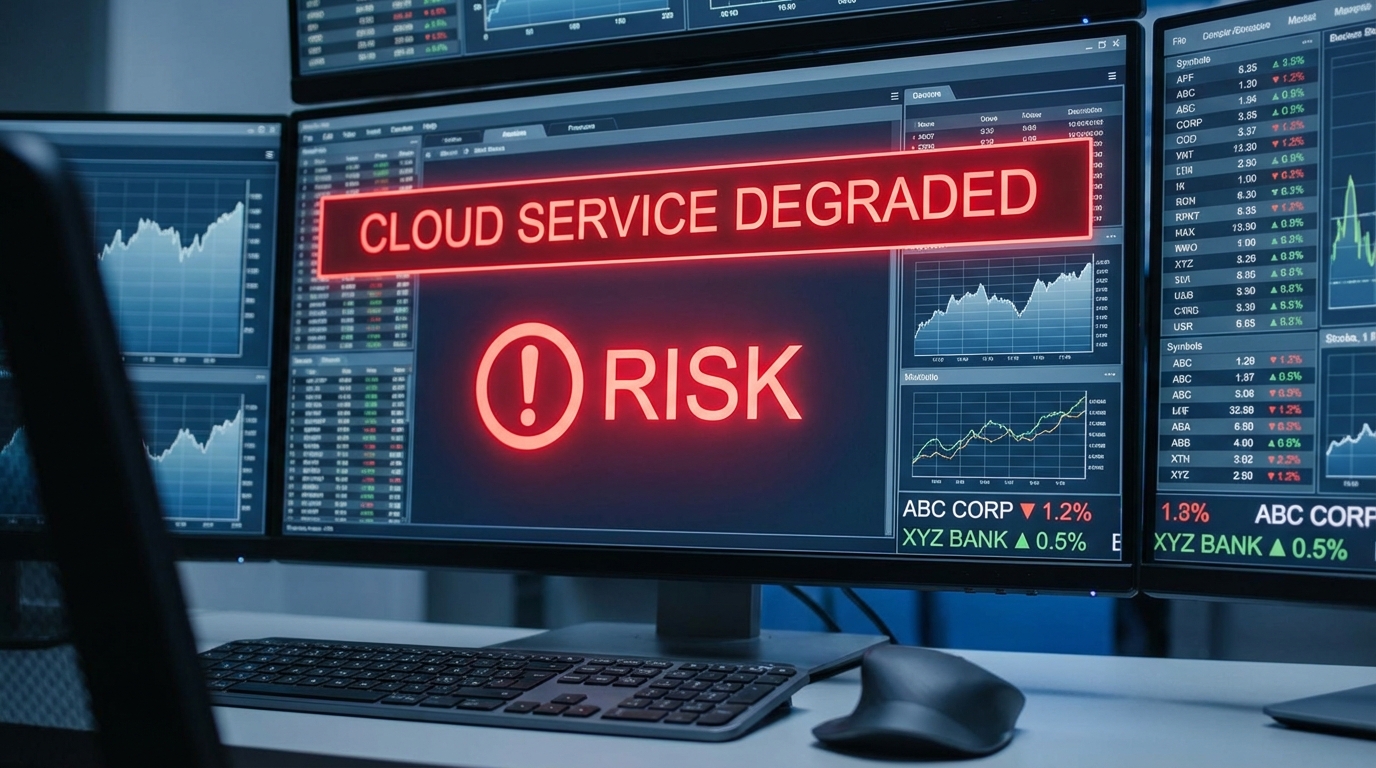
In the hyper-connected global economy of 2026, “the cloud” is no longer just a storage space; it is the central nervous system of global commerce. Consequently, when a Microsoft outage occurs, as it did on Thursday, January 22, 2026, the tremors are felt far beyond the IT department. For investors and wealth builders, these service disruptions are not merely technical glitches; they are fundamental risks that can impact quarterly earnings, supply chain stability, and long-term valuation multiples. As thousands of users in North America found themselves unable to access Outlook, Teams, and Microsoft Defender, the event served as a stark reminder of the “single point of failure” risks inherent in our modern digital infrastructure.
Navigating a Microsoft outage as a financial professional requires a clear-eyed analysis of its economic footprint. Beyond the immediate frustration of a blank screen, these outages trigger a series of financial consequences, ranging from lost productivity hours to potential SLA (Service Level Agreement) credit liabilities for the tech giant. In this guide, we will explore the core concepts of cloud dependency, provide actionable strategies for protecting your portfolio from “digital downtime,” and analyze the real-world scenarios that define the financial impact of the 2026 cloud crisis.
Infrastructure Fragility and Cloud Concentration
To understand the weight of a Microsoft outage, one must first appreciate the concept of “Cloud Concentration.” In 2026, a handful of providers—Microsoft Azure, Amazon Web Services (AWS), and Google Cloud—manage the vast majority of the world’s digital traffic. When one of these giants falters, it creates a “cascading failure” effect.
The Anatomy of the January 2026 Disruption
The Microsoft outage on January 22 was primarily concentrated in North America, impacting critical enterprise tools including Microsoft 365, Outlook, and the security-focused Microsoft Purview. Unlike a total system collapse, this was a “degraded service” event, where infrastructure in a specific geographic region failed to handle traffic loads properly. Microsoft’s engineers were forced to implement “load balancing” maneuvers, directing traffic to alternate healthy sections of their infrastructure to achieve recovery.
Entra ID and the Authentication Bottleneck
A recurring theme in recent disruptions is the vulnerability of the “Entra ID” (formerly Azure Active Directory) authentication layer. Because Microsoft 365 is an integrated ecosystem, a failure in the authentication system prevents users from signing into any service—even if the underlying servers for Word or Excel are healthy. For a business, this is the digital equivalent of having the lights on inside a building but the front door being locked.
Hedging Against “Digital Downtime”
As an investor, you cannot prevent a Microsoft outage, but you can certainly manage the “geopolitical and technical beta” associated with it. The 2026 economic environment is characterized by “thinning margins,” where even four hours of downtime can turn a profitable quarter into a loss for a logistics or trading firm.
Strategy 1: Evaluating “Cloud Diversification” as a Business Metric
When you are auditing a company for long-term growth, you should look at their “Multi-Cloud Strategy.” Companies that rely 100% on a single provider are at the mercy of that provider’s uptime.
- The “Multi-Cloud” Premium: Investors are increasingly rewarding firms that maintain redundancy across Azure and AWS. This “digital insurance” ensures that if a Microsoft outage occurs, the business can pivot its critical operations to a secondary provider within minutes.
- best financial planning tools for long-term growth
Strategy 2: Monitoring SLA Credits and Liability
For the Microsoft (MSFT) shareholder, the concern is the cost of “failure.” Most enterprise contracts include Service Level Agreements that guarantee 99.9% or 99.99% uptime.
- The “Service Credit” Trap: If a Microsoft outage lasts long enough to breach these thresholds, Microsoft must issue credits to its millions of customers. While a single event may only cost a few hundred million dollars, a pattern of frequent outages can lead to “multiple compression,” where investors decide the stock is too risky to trade at a premium P/E ratio.
- Actionable Step: Review Microsoft’s “Commercial Cloud” margins in the next earnings call. Look specifically for any mentions of increased “operational expenditure” related to infrastructure hardening.
Actionable Checklist for Investors:
- Check the “Entra” Dependency: Identify if your top holdings are using a single sign-on (SSO) provider. A Microsoft outage in the Entra layer can paralyze a company even if their own servers are fine.
- Monitor “Out-of-Band” Updates: Earlier in January 2026, Microsoft released emergency fixes for authentication failures. Frequent “emergency” patches often signal a stressed codebase.
- Hedge with Cybersecurity Leaders: Often, a Microsoft outage leads to a spike in demand for third-party security firms (like CrowdStrike or Palo Alto Networks) as companies look to reduce their “single vendor” risk.
- Follow Authoritative Sources: The Bank for International Settlements (BIS) has noted that “operational resilience” in cloud providers is a systemic risk for the global financial system.
Still Trading the Hard Way? Click Here to Start on AlgosOne
Examples, Scenarios, and Case Insights
To quantify the financial damage of a Microsoft outage, let’s look at a hypothetical “Mid-Size Enterprise” scenario in 2026.
Scenario: The $25 Million “Dead Zone”
Imagine a North American logistics firm with 5,000 employees that relies on Teams for dispatch and Outlook for client orders. A four-hour Microsoft outage in the middle of a Thursday workday can have the following impact:
| Impact Category | Financial Loss (Estimated) | Rationale |
| Direct Productivity | $12.5 Million | 5,000 employees idle for 4 hours at an average cost of $625/hr in revenue value. |
| Lost Sales Opportunities | $8.0 Million | Unanswered client emails and failed “e-commerce” checkout integrations. |
| Reputational Damage | $4.5 Million | Late deliveries and “silent” customer service lines leading to churn. |
| Total Event Cost | $25.0 Million | Approximately 1.2% of the company’s annual profit wiped out in 240 minutes. |
Case Insight: The “Canary in the Coal Mine” Hubs
Geographical data from January 2026 showed that major tech hubs like Vancouver, New York, and London were the first to report the Microsoft outage. For an active trader, monitoring Downdetector for these “canary” cities can provide a 15-to-30-minute head start on the broader market’s reaction. By the time the news hits the mainstream wires, the “risk-off” move in tech-heavy indices is often already complete.
Common Mistakes and Risks to Avoid
- Panic-Selling on the Headline: A Microsoft outage is often a “buy the dip” opportunity for the parent stock if the cause is technical (like load balancing) rather than a fundamental security breach.
- Underestimating the “Shadow IT” Risk: During an outage, employees often turn to unsecure personal apps (like WhatsApp or Telegram) to communicate. This creates “hidden” cybersecurity liabilities that can manifest months later.
- Ignoring the “AI Code” Factor: Some critics argue that the push to use AI-generated code (like Copilot) for infrastructure management is leading to more frequent “sudden-death” outages. the impact of AI on decentralized finance (DeFi)
- Relying on the “Status Page”: Microsoft’s official status page often lags behind user reports. In the January 22nd event, Downdetector showed 16,000 reports before the official admin center updated.
Conclusion – Key Takeaways & Next Steps
The Microsoft outage of January 2026 is a pivotal case study in the fragility of the 21st-century “Cloud Monopoly.” While Microsoft’s quick response and traffic rebalancing mitigated the damage, the event serves as a clear signal that “Digital Resilience” is the most important financial metric of the decade. For the investor, wealth building in this environment requires a transition from “growth-at-all-costs” to “resilient growth.”
Ultimately, your goal is to identify companies that treat a Microsoft outage as a certainty, not a possibility. By diversifying your tech exposure and focusing on firms with robust disaster recovery plans, you can ensure that your long-term returns remain “healthy” even when the infrastructure is down.
Are you ready to audit your portfolio for “Cloud Risk”?
Start by identifying which of your holdings rely exclusively on Azure or Microsoft 365. Would you like me to create a “Cloud Concentration Risk Scorecard” to help you evaluate the technical resilience of your top-five stock holdings?