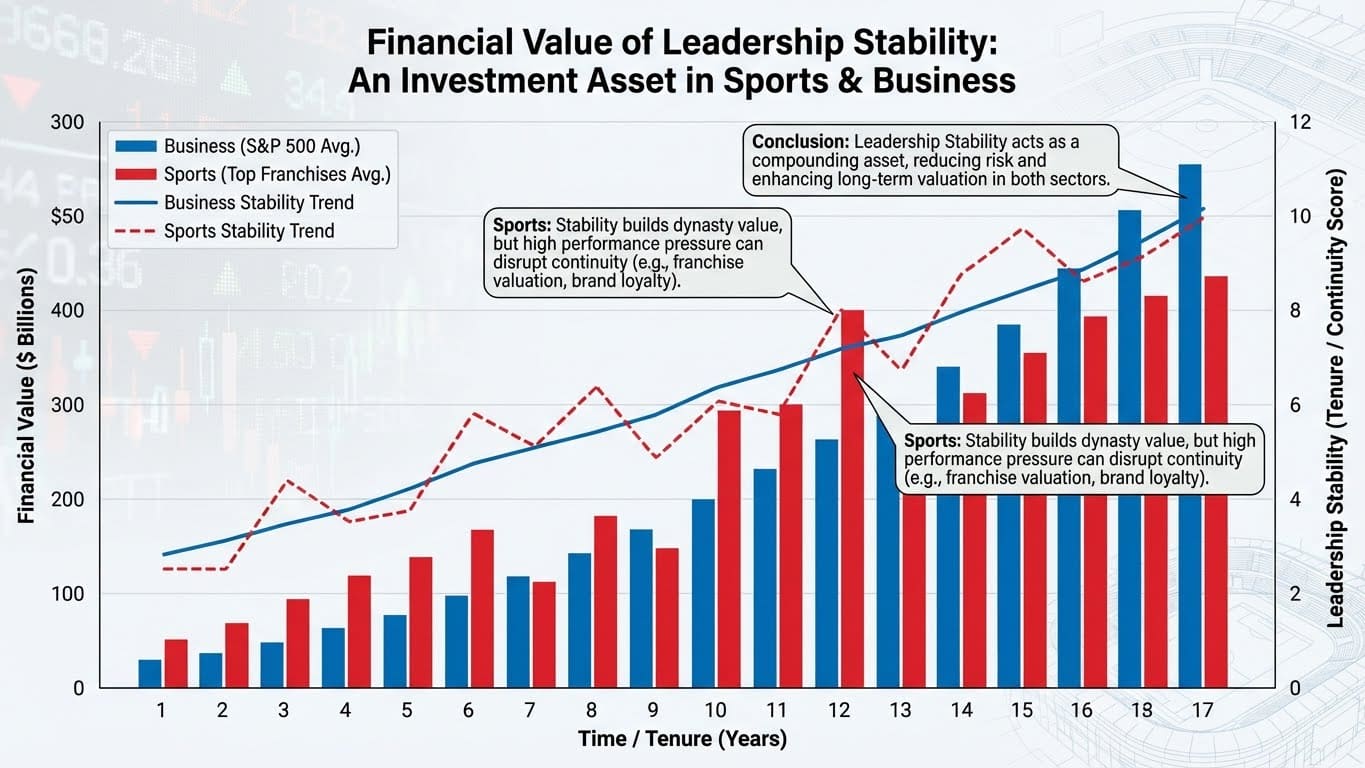
The aftermath of a 30-6 playoff loss to the Houston Texans in January 2026 has left the Pittsburgh Steelers at a crossroads, yet the silence from the podium speaks volumes about a broader economic truth. While head coach Mike Tomlin remained “mum” on his coaching future during the post-game press conference, superstar quarterback Aaron Rodgers was vocal in his support, slamming the “snap decisions” of modern sports culture. For the astute investor, this isn’t just a sports story; it is a masterclass in why leadership stability as an investment asset is often undervalued in high-stakes environments.
In the volatile world of 2026 financial markets, where high interest rates and geopolitical shifts demand steady hands, the “Steelers Way”—characterized by having only three head coaches since 1969—offers a profound lesson in capital preservation. While fans demand immediate changes after a disappointing postseason exit, the financial reality of organizational churn suggests that continuity often yields higher long-term returns. Understanding the leadership stability as an investment asset framework allows you to identify resilient companies and franchises that prioritize institutional memory over reactionary “course corrections.”
Core Concept: The Governance of Continuity
At its heart, the decision to retain or move on from a leader like Mike Tomlin is a capital allocation decision. In the NFL, as in the S&P 500, “churn” is often priced into the business model as a signal of decisiveness. However, the Pittsburgh Steelers have historically designed their governance to minimize the hidden costs of turnover.
The Hidden Costs of Leadership Churn
When an organization replaces a tenured leader, it doesn’t just lose a manager; it loses a repository of cultural and operational data. In finance, this is known as the “reset cost.” A new head coach—or a new CEO—brings a fresh scheme that often necessitates a complete overhaul of personnel and strategy. This churn results in massive dead cap hits in football and restructuring charges in corporate balance sheets. Therefore, choosing to maintain stability is an active choice to protect the “sunk costs” of current talent development.
The Market Premium for Predictability
Investors pay a premium for predictability. In the sports franchise market, where team valuations have compounded at 13% annually over the last sixty years, the Steelers remain one of the most valuable assets in North American sports. This valuation isn’t just a product of winning percentages; it is a result of a “decorrelation with financial markets” that institutional investors crave. By maintaining a stable leadership structure, the organization ensures that its value remains steady even during a “down” year on the field.
Practical Strategies: Identifying Stable Leadership in Your Portfolio
Identifying leadership stability as an investment asset requires looking past the quarterly “playoff loss” and analyzing the underlying culture of the entity. Whether you are evaluating a professional sports franchise or a Fortune 500 company, the signs of sustainable stability are consistent.
The “Rodgers Defense” Metric
Aaron Rodgers’ vocal defense of Tomlin—calling the hot-seat talk an “absolute joke”—highlights a key metric: internal buy-in. When the most significant individual contributors in an organization publicly defend the leadership during a crisis, it indicates that the culture is intact. As an investor, you should look for companies where employee retention remains high during market downturns.
Analyzing Governance Design over Performance Narrative
The most successful long-term investments are those where “stability” is a feature of the governance model, not a reaction to a winning streak. You can evaluate this by looking at a company’s historical leadership tenure compared to its industry peers.
To implement this into your wealth-building strategy, follow these actionable steps:
- Audit Average Tenure: Look for leadership teams with average tenures exceeding seven years, which typically marks the completion of a full strategic cycle.
- Evaluate Succession Transparency: Does the organization have a clear, publicized path for when a leader like Tomlin eventually decides to step away?
- Analyze Institutional Memory: Check if the mid-level management (coordinators or department heads) has been promoted from within, preserving the core culture.
- Review Capital Expenditure Cycles: Ensure that the organization is investing in long-term infrastructure (like stadium upgrades or R&D) rather than short-term “quick fixes.”
Examples, Scenarios, or Case Insights
To understand the leadership stability as an investment asset model, let’s look at a comparative scenario between a “Stability Franchise” (like the Steelers) and a “Churn Franchise.”
Scenario: The $100 Million Coaching Reset
Imagine two organizations, Firm A (Stability) and Firm B (Churn). Each earns $500 million annually but faces a significant setback (a “playoff loss”).
| Financial Impact | Firm A (Maintains Leadership) | Firm B (Fires and Replaces) |
| Severance/Buyout Costs | $0 | $20 Million |
| Recruitment/Sign-on Bonuses | $0 | $15 Million |
| Operational Reset Costs | $5 Million (Minor tweaks) | $45 Million (New systems) |
| Culture Dilution Risk | Low | High |
| Immediate ROI Change | +2% (Efficiency) | -12% (Transition lag) |
As shown in the table, Firm B incurs nearly $80 million in direct and indirect costs simply to “signal” change to the public. Meanwhile, Firm A reallocates that capital toward improving the existing system. This is why a leader like Mike Tomlin, earning $17 million annually, is actually a cost-saving asset for the Steelers; his presence prevents the massive capital leakage associated with a total organizational reset.
According to reports from the World Bank on institutional governance, organizations that prioritize long-term leadership stability consistently outperform those in high-volatility environments. This global data reinforces the idea that Mike Tomlin’s silent contemplation of his future is not a crisis, but a moment for the organization to decide if it will stick to its high-value governance model.
Japan Earthquake Economic Impact: What Investors Need to Know
Common Mistakes and Risks to Avoid
- Confusing Stability with Stagnation: The greatest risk of the leadership stability as an investment asset theory is “loss of edge.” If a leader stops evolving (e.g., failing to win a playoff game in a decade), stability can become a liability.
- Falling for the Sunk Cost Fallacy: Investors often stick with a failing leader simply because they have already invested so much time. You must differentiate between a “down cycle” and a “broken model.”
- Ignoring the “Rodgers Effect”: While veteran support is a plus, relying too heavily on the opinions of aging stars (like a 42-year-old Rodgers) can blind an organization to the need for a total youth movement.
- Underestimating Media Pressure: In 2026, social media “twitter experts” can create immense pressure on owners. A weak ownership group may fold to public sentiment, destroying long-term value for short-term peace.
- Neglecting External Opportunities: Mike Tomlin’s potential move to a TV role ($5M-$10M bidding war) indicates his market value remains high. If you own an asset that the rest of the market wants to poach, you are likely in a position of strength.
Conclusion – Key Takeaways & Next Steps
The uncertainty surrounding Mike Tomlin’s future in Pittsburgh is a Rorschach test for investors. Do you see a stagnant program in need of a fresh start, or do you see a rare example of leadership stability as an investment asset that protects the organization from the chaos of the open market? Aaron Rodgers’ defense suggests that inside the locker room, the culture remains a premium commodity.
In a financial landscape where “decisiveness” is often a synonym for “reactionary,” the ability to remain “mum” and assess the situation with a long-term mindset is a superpower. For your own portfolio, look for leadership that resists the urge to burn the building down after a single bad quarter. Stability isn’t just about sticking with the same person; it’s about allocating capital toward a proven process.
Would you like me to analyze the contract structures of other high-tenure CEOs to see if they follow the “Steelers Model” of compensation? Explore our latest insights to build a more resilient and stable wealth-building strategy today.
Under Armour Surges After Fairfax Financial Discloses 22% Stake: A New Chapter for Investors?