A sudden aviation incident can dominate headlines in minutes—yet the market impact can last far longer than the news cycle. Understanding how aviation accidents affect stock prices helps you separate emotion from analysis, protect your portfolio from “headline risk,” and spot when a selloff is justified (or overdone).
Today’s market environment (2025–2026) adds fuel to fast moves: higher-for-longer interest rates can tighten liquidity, volatility can spike quickly, and investors often punish uncertainty before facts are confirmed. That’s why having a process matters more than having a prediction.
Recently, news outlets reported that a Cessna C550 crashed while landing near Statesville Regional Airport in North Carolina, with multiple fatalities confirmed by local authorities, and that the aircraft was linked through ownership records to an entity associated with former NASCAR driver Greg Biffle. The FAA said the NTSB will lead the investigation. star-telegram.com
Section 1 – Core Concept/Overview
When an aviation accident occurs, markets react to two things:
- Direct financial exposure (costs and cash flows)
- Uncertainty (what’s unknown today that could become expensive tomorrow)
This is true whether you invest in airlines, aircraft manufacturers, aerospace suppliers, insurers, travel platforms, or even industrial companies that depend on air cargo. In addition, social media accelerates narratives, and narratives can move prices before analysts update spreadsheets.
Key Component / Sub-Concept 1: Direct Costs, Liability, and Insurance
The fastest transmission channel is the balance sheet.
Depending on the situation, direct costs may include:
- Legal liability and litigation (claims, settlements, legal defense)
- Insurance deductibles and premium increases
- Operational disruption (grounded aircraft, delayed routes, maintenance inspections)
- Asset impairment (aircraft write-downs, equipment replacement)
However, “who pays” varies widely. For example, the operator, owner, maintenance provider, manufacturer, and insurers may all face different exposures depending on contracts, fault, and jurisdiction. Therefore, the market often sells first and asks questions later.
Key Component / Sub-Concept 2: Second-Order Effects (Regulation, Demand, and Financing)
Direct costs are only part of the story. Second-order effects can shape longer-term returns:
- Regulatory scrutiny (inspections, temporary restrictions, new compliance costs)
- Demand shock (booking weakness after high-profile incidents, even if short-lived)
- Financing stress (higher borrowing costs if risk perceptions rise)
- Reputation and brand risk (especially for consumer-facing travel businesses)
This is where how aviation accidents affect stock prices becomes a practical investing question: markets reprice risk, not just earnings.
Section 2 – Practical Strategies / Framework
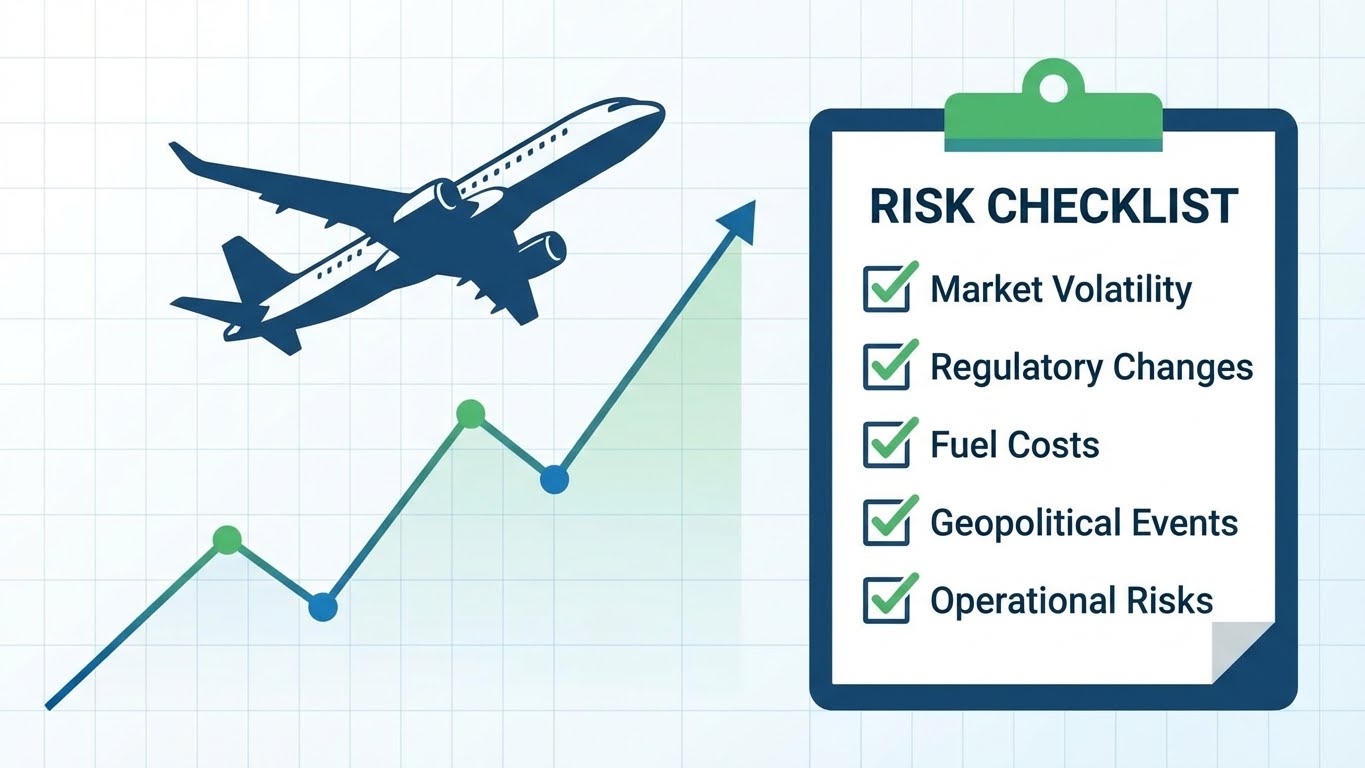
You don’t need to predict investigations to manage event risk. You need a repeatable checklist that forces discipline.
Step-by-step or Strategy Type 1: The “72-Hour Headline Risk” Checklist
(How aviation accidents affect stock prices in the first 72 hours)
In the first three trading sessions, price action is often driven by uncertainty. Use this sequence:
- Identify your exposure
- Do you own: the airline/operator, an aircraft maker, insurers, airports, travel platforms, or suppliers?
- Separate “confirmed” vs “unknown”
- Confirm what’s verified by authorities and what’s still speculation.
- Map the likely cost owners
- Operator vs owner vs maintenance provider vs manufacturer vs insurer.
- Check liquidity and leverage
- Highly levered firms can suffer more because they have less room for surprises.
- Assess whether this is idiosyncratic or systemic
- One-off operational failure is different from a fleet-wide technical issue.
- Decide your action
- Hold, reduce, hedge, or do nothing—based on your plan, not your feed.
In addition, remember that in a higher-rate environment, markets penalize uncertainty more aggressively because refinancing risk is more painful.
Step-by-step or Strategy Type 2: Build a “Risk-Weighted Watchlist” Before You Need It
Most investors react late because they build frameworks after the event. Instead, set up a watchlist that ranks holdings by event sensitivity:
- High sensitivity: airlines, travel platforms, single-product suppliers
- Medium sensitivity: diversified aerospace suppliers, airports, logistics networks
- Lower sensitivity: broad industrial conglomerates with many revenue lines
To make this actionable, use a simple table you can keep in your notes.
| Asset Type | Why It Can Drop After an Accident | What You Check Before Acting |
|---|---|---|
| Airline / Operator | Disruption + reputation + regulatory costs | Liquidity, route exposure, insurance coverage, guidance language |
| Aircraft Manufacturer | Concern about design or safety perception | Whether incident suggests systemic issue vs isolated event |
| Aerospace Suppliers | Supply-chain scrutiny + contract risk | Customer concentration, margin buffer, backlog stability |
| Insurers / Reinsurers | Claims severity + premium repricing | Exposure limits, reserving strength, reinsurance structure |
| Travel Platforms | Demand shock + cancellations | Booking trends, refund policies, diversification by region |
As a result, your response becomes systematic instead of emotional—even when headlines are intense.
Section 3 – Examples, Scenarios, or Case Insights
Let’s use a simple hypothetical example (not a prediction about any specific company).
Scenario A: You Own a Travel + Airline Basket
Assume your portfolio is $100,000:
- 8% airline stocks ($8,000)
- 4% travel platform stocks ($4,000)
- 6% broad market ETF ($6,000)
- 82% diversified core holdings ($82,000)
A high-profile aviation incident hits the news. Over two days:
- Airline basket falls -7%
- Travel platform falls -4%
- Broad market is flat
Your portfolio impact is roughly:
- Airlines: $8,000 × 7% = -$560
- Travel: $4,000 × 4% = -$160
- Total: -$720, or -0.72% overall
This is where discipline matters. If the drawdown is small relative to your plan, you might not need to do anything—especially if your thesis is long-term and diversified.
Scenario B: Concentrated Position + High Leverage Risk
Now assume you hold $25,000 in one aviation-related stock (25% of your portfolio) because it “always bounces.”
A single-stock drop of -12% is a -$3,000 hit—suddenly your emotions become the strategy. Therefore, concentration is often the hidden driver of poor decisions after shocking news.
This is why how aviation accidents affect stock prices should influence position sizing more than it influences market timing.
Scenario C: Turning Risk into a Better Process (Not a Hot Take)
Instead of trying to “trade the tragedy,” you can improve your process:
- Add a rule: No single stock above 10% without a written risk thesis.
- Add a rule: After sudden news, wait for a second source and re-check facts.
- Add a rule: If you sell, define the re-entry trigger (e.g., clarity on investigation scope).
Coca-Cola Testing Major Change: What It Means for Long-Term Investors
Common Mistakes and Risks
Avoid these common investor mistakes when aviation headlines break:
- Confusing news with investable insight (not every headline changes long-term cash flows)
- Ignoring who actually bears the cost (operator vs insurer vs manufacturer)
- Overreacting to early, incomplete information (facts evolve quickly)
- Averaging down without a thesis update (“it’s cheaper” isn’t a thesis)
- Concentration creep (adding to one name until it dominates your portfolio)
- Forgetting macro conditions (tight liquidity can amplify selloffs in 2025–2026)
- Treating social media as confirmation (it’s often narrative, not evidence)
Key risk reminder: official investigations can take time, and outcomes can affect litigation, insurance pricing, and operational constraints. The NTSB outlines how aviation investigations work and why early details can change as evidence is collected.
Conclusion – Key Takeaways & Next Steps
Aviation incidents are tragic, and they can also be powerful reminders of how markets price uncertainty. Knowing how aviation accidents affect stock prices helps you respond with a framework: identify exposure, map who bears costs, stress-test leverage and liquidity, and act only if your thesis truly changed.
Your next step is simple: build a one-page “headline risk” checklist and apply it to your portfolio today—before the next breaking-news alert. If you want to go deeper, explore our guides on diversification, position sizing, and risk tolerance so you can invest with confidence through volatility.