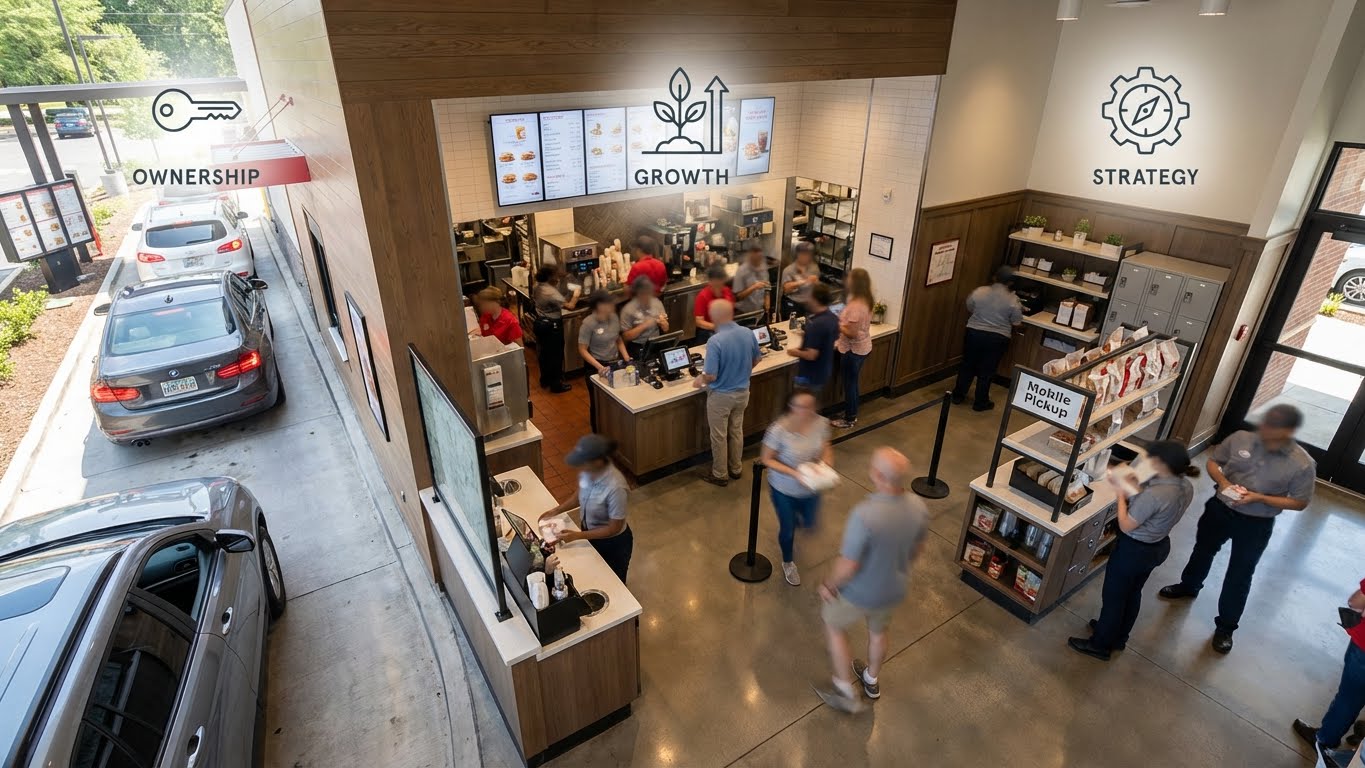
Chick-fil-A has quietly announced a structural shift that could reshape how its business grows in the coming decade. Headlines about a Chick-fil-A major change 425 restaurants may sound like pure consumer news, but for investors and business-focused readers, this is a live case study in capital allocation, incentives, and long-term value creation.
In this article, we’ll break down what’s actually changing, why it matters in the 2025–2026 economic environment, and how you can use this move as a framework for analyzing similar corporate decisions.
Section 1 – Core Concept/Overview
What the Chick-fil-A major change 425 restaurants headline really means
Chick-fil-A operates most of its restaurants through a unique owner-operator model, where individuals run units under tight corporate standards with relatively low upfront capital but strong performance incentives. However, about 400–425 locations in nontraditional venues—such as airports, college campuses, and hospitals—have historically been licensed rather than operator-run. techinasia.com+1
The Chick-fil-A major change 425 restaurants story is essentially this: the company plans to transition many of these licensed locations into its core franchised owner-operator model, wherever feasible. In plain English, Chick-fil-A wants more of its restaurants run by hands-on local operators instead of third-party licensees.
From a finance perspective, this is a pivot in governance and incentives, not just branding. It changes who makes decisions, who bears risk, and how profits are shared at hundreds of sites.
Key Component 1: Licensed vs owner-operator economics
Licensed restaurants typically:
- Sit in nontraditional venues (airports, stadiums, campuses).
- Are controlled by third parties who pay fees to use the brand.
- Give the parent company less direct control over operations, staffing, and customer experience. global.morningstar.com
Owner-operator units, by contrast:
- Are run by local operators selected and trained by Chick-fil-A.
- Have tightly aligned incentives—operators share in profits but must follow rigorous performance and service standards.
- Historically deliver some of the strongest unit volumes and margins in the quick-service industry. techinasia.com
By moving more of the 425 licensed locations toward the owner-operator model, Chick-fil-A is betting that incentives and culture will outweigh the convenience of hands-off licensing.
Key Component 2: Timing in a shifting macro environment
The decision also sits within a broader economic backdrop. Global inflation is easing but still above central bank targets in some regions, and borrowing costs remain higher than in the ultra-low-rate 2010s.
For consumer-facing businesses like Chick-fil-A, that means:
- Customers are more price-sensitive.
- Wage and input costs remain a pressure point.
- Companies seek models that protect margins and deliver consistent service.
The Chick-fil-A major change 425 restaurants move can be read as a long-term bet that high-quality operations and brand consistency will matter even more when every customer visit counts.
Section 2 – Practical Strategies / Framework
How investors can analyze the Chick-fil-A major change 425 restaurants move
You can’t buy Chick-fil-A stock—it’s privately held. But you can use this shift as a template to evaluate public companies in your portfolio or watchlist.
Here’s a simple framework.
Step-by-step Strategy 1: Understand the business model levers
Start by breaking down the moving pieces in any “major change” announcement:
- Ownership structure
- Who owns and operates the assets (company-owned, franchised, licensed, JV)?
- Capital requirements
- Who funds new locations, remodels, or technology upgrades?
- Incentive alignment
- Are local managers/operators rewarded directly for better performance?
- Control & quality
- How easily can the parent enforce brand and service standards?
In the Chick-fil-A major change 425 restaurants story, the company is trading some simplicity of licensing for more direct control and stronger operator incentives. That usually improves unit economics if executed well.
Step-by-step Strategy 2: Translate chain-level decisions into investment insights
Even though you can’t invest directly in Chick-fil-A, similar questions apply to publicly traded restaurant and retail chains:
- Are they shifting toward franchising to lighten capital needs?
- Are they buying back franchises to reassert control and boost strategic flexibility?
- Are they experimenting with nontraditional formats (kiosks, ghost kitchens, campus locations) that behave more like Chick-fil-A’s licensed units? فول
Use this checklist when you read corporate news:
- Does this change improve or weaken incentive alignment?
- Does it likely raise or lower return on invested capital (ROIC)?
- Is the company chasing short-term growth or building durable unit economics?
Actionable steps for individual investors
Here’s a simple 5-step process you can apply to any similar story:
- Read beyond the headline
- Find the original press release or earnings call, not just social media summaries.
- Map the change to the P&L
- Ask: which line items might be affected (revenue per unit, franchise fees, labor costs)?
- Compare with peers
- Are competitors making similar moves, or is this company taking a unique path?
- Stress-test the scenario
- Imagine both an upside and downside outcome (we’ll walk through examples below).
- Decide your response
- For public stocks, that might mean holding, trimming, or building a position. For private businesses or franchise hopefuls, it may alter your expansion or partnership decisions.
From Grocery Aisle to Stock Portfoliohttps://wsphere.net/investing-lessons-from-the-shredded-cheese-recall/
Section 3 – Examples, Scenarios, or Case Insights
Scenarios: How the Chick-fil-A major change 425 restaurants could impact returns
To see how this might play out financially, let’s walk through simplified, illustrative numbers. These are not Chick-fil-A’s actual figures, but they show how the logic works.
Example 1: Higher sales and margin from operator-led units
Suppose a licensed campus location currently does:
- Annual sales: $2.0 million
- Licensed margin to Chick-fil-A: 10% of sales → $200,000
If converting to an owner-operator model improves service, hours, and local marketing, it might lift sales and profitability:
- Annual sales (operator-led): $2.4 million
- Net royalty + rent to Chick-fil-A: 15% of sales → $360,000
Impact:
- Revenue to Chick-fil-A from that unit rises from $200,000 to $360,000.
- The operator is incentivized by a share of store-level profits, so both sides benefit.
Scale that uplift across even a fraction of the Chick-fil-A major change 425 restaurants pool, and the cumulative effect on corporate cash flows could be meaningful.
Example 2: Execution risk scenario
However, not every conversion will be smooth. Imagine another licensed location where:
- Transition requires significant remodeling and training.
- Sales drop 10% in the first year as operations reset.
- Some nontraditional venues (like certain campuses) are simply not well-suited to the operator model.
In that case, the company might incur:
- One-time capex and training costs.
- Short-term margin pressure.
- The possibility it must exit specific locations entirely.
Illustrative table: Potential outcomes of the transition
| Scenario | Sales Change vs. Licensed | Corporate Margin Change | Long-Term Effect on Value* |
|---|---|---|---|
| Best case – strong operators | +20% | +5–7 percentage points | Higher cash flows and brand equity |
| Base case – moderate improvements | +5–10% | +2–3 percentage points | Gradual uplift in unit economics |
| Worst case – poor execution | -10–15% | -2–3 percentage points | Need to close or re-license units |
*Illustrative only, not based on actual Chick-fil-A disclosures.
For an investor, the key is not guessing the exact numbers, but understanding which variables matter and how sensitive the business is to changes in unit performance.
Common Mistakes and Risks
When interpreting stories like the Chick-fil-A major change 425 restaurants headline, many investors fall into predictable traps:
- Focusing only on headline growth
- “More units” or “new format” sounds exciting, but unit economics and ROIC matter more than raw store counts.
- Ignoring operational complexity
- Converting hundreds of locations at once stretches training, supply chains, and corporate oversight.
- Assuming all nontraditional venues are equal
- Airport units, hospital cafeterias, and campus food courts each have different customer patterns and cost structures. global.morningstar.com
- Overreacting to short-term noise
- Media coverage may stress controversy or novelty, while the real impact shows up over 3–5 years in margins and cash flows.
- Not considering the macro backdrop
- Shifts in consumer spending, inflation, and interest rates—highlighted in global outlooks from organizations like the IMF—can amplify or dampen the benefits of corporate strategy changes.
Being aware of these risks helps you stay focused on fundamentals instead of buzz.
Conclusion – Key Takeaways & Next Steps
The Chick-fil-A major change 425 restaurants story is more than a quirky fast-food headline. It is a real-time case study in how ownership structures, incentives, and macro conditions interact to shape long-term business performance.
Key lessons you can apply:
- Structural changes (like shifting from licensed to owner-operator models) are capital allocation decisions, not just branding moves.
- The quality of unit economics and incentives often matters more than store-count growth.
- Macro conditions for 2025–2026—moderating but still uncertain inflation and interest rates—make operational discipline even more critical.
As an investor or finance-focused reader, your next steps could be:
- Review similar strategic announcements from companies you follow.
- Use the framework in this article to map those changes to ROIC and risk.
- Build or refine watchlists of businesses that show thoughtful, long-term–oriented decision-making.
If you run or plan to run a business—franchise or otherwise—this case also reminds you that who runs your locations and how they’re incentivized can be as important as where you open them.
Keep exploring stories like the Chick-fil-A major change 425 restaurants with an investor’s mindset, and you’ll steadily sharpen your ability to separate narrative from real value creation.