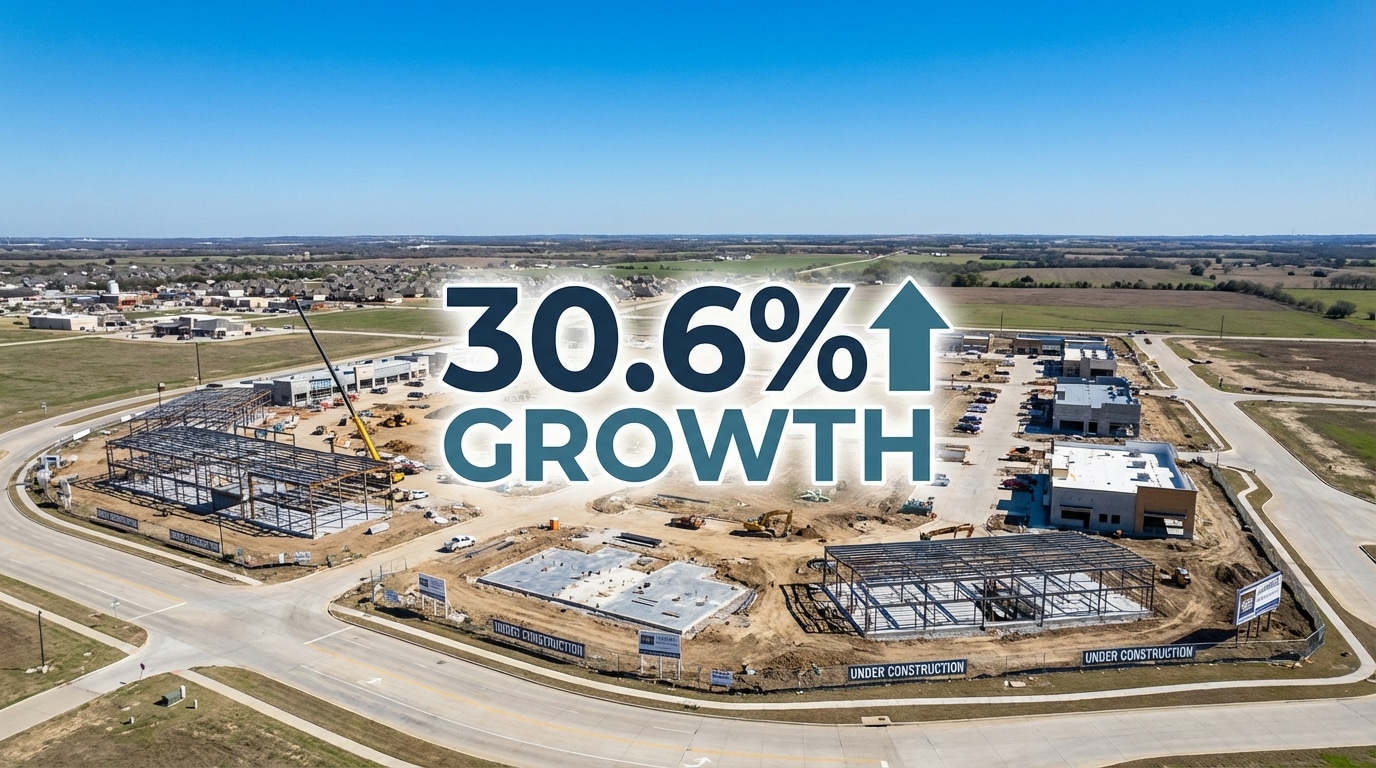
The entrepreneurial landscape of 2026 is witnessing a geographic shift that few predicted a decade ago. While Austin and Houston have long dominated the headlines, a new champion has emerged in the North Texas “Golden Corridor.” If you are looking for the fastest growing Texas city for small businesses, you need to look exactly one hour northeast of Dallas. According to the latest 2025-2026 data from the U.S. Census Bureau and regional economic development reports, the city of Princeton, Texas, has claimed the title of the fastest-growing city in the United States, boasting a staggering 30.6% annual growth rate.
For small business owners and investors, this isn’t just a population statistic; it is a signal of unprecedented market opportunity. Princeton has transitioned from a rural farming community into a booming suburban hub, creating a “blank slate” for service providers, retailers, and tradespeople. As the Dallas-Fort Worth mega-region expands, Princeton offers a unique combination of affordable commercial entry points and a rapidly growing customer base that is hungry for local amenities. In this guide, we will analyze why Princeton is currently the fastest growing Texas city for small businesses and provide a strategic framework for anyone looking to plant roots in this booming economy.
The Economic Engine Behind Princeton’s Boom
To understand why Princeton is the fastest growing Texas city for small businesses, you must first understand the “overflow effect” of the DFW metroplex. As neighboring cities like Frisco and McKinney reach saturation and peak pricing, both residents and entrepreneurs are pushing further northeast in search of value.
The Affordability Advantage
The primary driver of Princeton’s growth is its relative affordability compared to the rest of North Texas. In 2026, while median home prices in Frisco exceed $700,000, Princeton maintains a median home value significantly lower, attracting young families and first-time homebuyers. For a small business, this demographic is gold. These residents are not just looking for a place to sleep; they are looking for local coffee shops, boutique fitness centers, and professional services that they currently have to drive 20 minutes to find in McKinney.
Infrastructure and the “Tollway Effect”
Infrastructure projects scheduled for completion in late 2025 and 2026 have effectively “shrunk” the distance between Princeton and the major corporate hubs of Plano and Richardson. The expansion of the North Texas Tollway and improvements to U.S. Highway 380 have made Princeton a viable “bedroom community” that is quickly evolving into a self-sustaining city. This connectivity ensures a consistent flow of both capital and talent into the local economy, solidifying its status as the fastest growing Texas city for small businesses.
Practical Strategies for Small Business Success in Princeton
Entering a hyper-growth market requires a different tactical approach than established urban centers. In Princeton, the goal is not to compete on price with big-box retailers, but to fill the “service vacuum” that rapid population growth creates.
Strategy 1: Identifying High-Demand Service Niches
In the fastest growing Texas city for small businesses, the most immediate opportunities lie in residential services and localized retail.
- Home Services: With thousands of new rooftops added between 2020 and 2025, there is an immense demand for landscaping, HVAC maintenance, and smart-home installation.
- Specialized Retail: Residents are currently commuting for dining and boutique shopping. Small businesses that offer a “third space” experience—such as artisanal bakeries or coworking cafes—are seeing rapid adoption.
- Health and Wellness: As the population skews younger, pediatric care, veterinary services, and family dentistry are critical infrastructure needs that are currently underserved.
Strategy 2: Leveraging Local Economic Incentives
The Princeton Economic Development Corporation (EDC) is actively courting small businesses to diversify the city’s tax base away from purely residential property taxes.
- Grants and Abatements: Check for 380 Agreements or local sales tax rebates for businesses that bring significant jobs to the area.
- Infrastructure Assistance: Some new developments offer assistance with “utility tie-ins” or facade improvements to maintain the city’s “small-town vibe” while modernizing its core.
- Networking Hubs: Join the Princeton Area Chamber of Commerce early. In a fast-growing city, “who you know” determines your speed-to-market.
Actionable Checklist for Princeton Entrepreneurs:
- Analyze Residential Permits: Track the latest single-family permits through the U.S. Census Bureau to identify which neighborhoods are maturing fastest.
- Secure Commercial Space Early: Land prices in Collin County are appreciating at 12-15% annually in 2026. Locking in a lease or purchase now prevents being priced out in 2027.
- Focus on “Family-Centric” Marketing: Princeton is a family-first community. Marketing strategies that highlight safety, community involvement, and local roots perform best.
- Build a Local Workforce: With many residents currently commuting to Dallas, offering local employment is an attractive “quality of life” perk that helps with talent retention.
Central PA Retail Closures 2026
Market Comparison: Princeton vs. The Big Four
While Princeton is the fastest growing Texas city for small businesses by percentage, how does it stack up against established giants like Austin or Houston in 2026?
Case Insight: The “Blank Slate” vs. The “Red Ocean”
In a “Red Ocean” market like Austin, competition is fierce and the cost of entry is astronomical. A small business in Austin faces high rents, a saturated marketing landscape, and a complex regulatory environment. In contrast, Princeton is a “Blue Ocean” or a “Blank Slate.” You aren’t competing with ten other local coffee shops; you might be the only one within a three-mile radius of a new 500-home development.
| Economic Metric (2026) | Princeton, TX | Austin, TX | Houston, TX |
| Annual Growth Rate | 30.6% | 1.8% | 1.9% |
| Barrier to Entry | Low (Abundant land) | High (Zoning/Cost) | Medium (Market Size) |
| Primary Customer Base | New Homeowners | Tech/Gen Z | Energy/Logistics |
| Small Business Support | Aggressive (Incentives) | Mature (Competitive) | Diverse (Broad) |
As the 2026 Texas Economic Outlook from the Federal Reserve Bank of Dallas indicates, the state’s economy is shifting toward “suburban industrialization.” This trend favors cities like Princeton, where land is available for the “Last-Mile” delivery hubs and local service centers that power the modern economy.
Common Mistakes and Risks to Avoid
- Underestimating Infrastructure Lag: In the fastest growing Texas city for small businesses, road construction and utility expansions can sometimes lag behind residential growth. Ensure your business plan accounts for potential commute delays or utility “waiting lists.”
- Failing to Adapt to “Big-Box” Arrival: Walmart and other major retailers are already moving into Princeton. Small businesses must focus on experience and personalization—things a major chain cannot replicate.
- Ignoring the “Bedroom Community” Schedule: Remember that many residents still commute. Your peak business hours in Princeton may differ significantly from a downtown urban center.
- Over-Leveraging on Speculation: Growth is high, but 2026 interest rates are still significantly higher than the 2020 era. Maintain a healthy debt-to-equity ratio to survive any regional cooling.
- Neglecting Local Politics: In a small but fast-growing town, city council decisions on zoning can change your business environment overnight. Stay engaged with local government.
Conclusion – Key Takeaways & Next Steps
Princeton, Texas, is officially the fastest growing Texas city for small businesses, offering a rare “ground-floor” opportunity in the heart of the nation’s most vibrant economic region. By focusing on essential services, residential infrastructure, and leveraging the city’s current “blank slate” status, entrepreneurs can build high-value enterprises with far less competitive friction than in major metropolitan cores. The population boom of 2026 is just the beginning; as these new rooftops turn into established neighborhoods, the businesses that planted their flags today will become the institutional pillars of tomorrow.
Stability in the Texas market is built on growth, and right now, all roads lead to Princeton. Reiterate your commitment to your vision by securing your position in the Golden Corridor.
Would you like me to help you draft a specific “Demographic Analysis” for your business type in the Princeton/Celina area to see if the customer density matches your goals? Explore our further resources to stay updated on the latest wealth-building strategies in the Lone Star State.