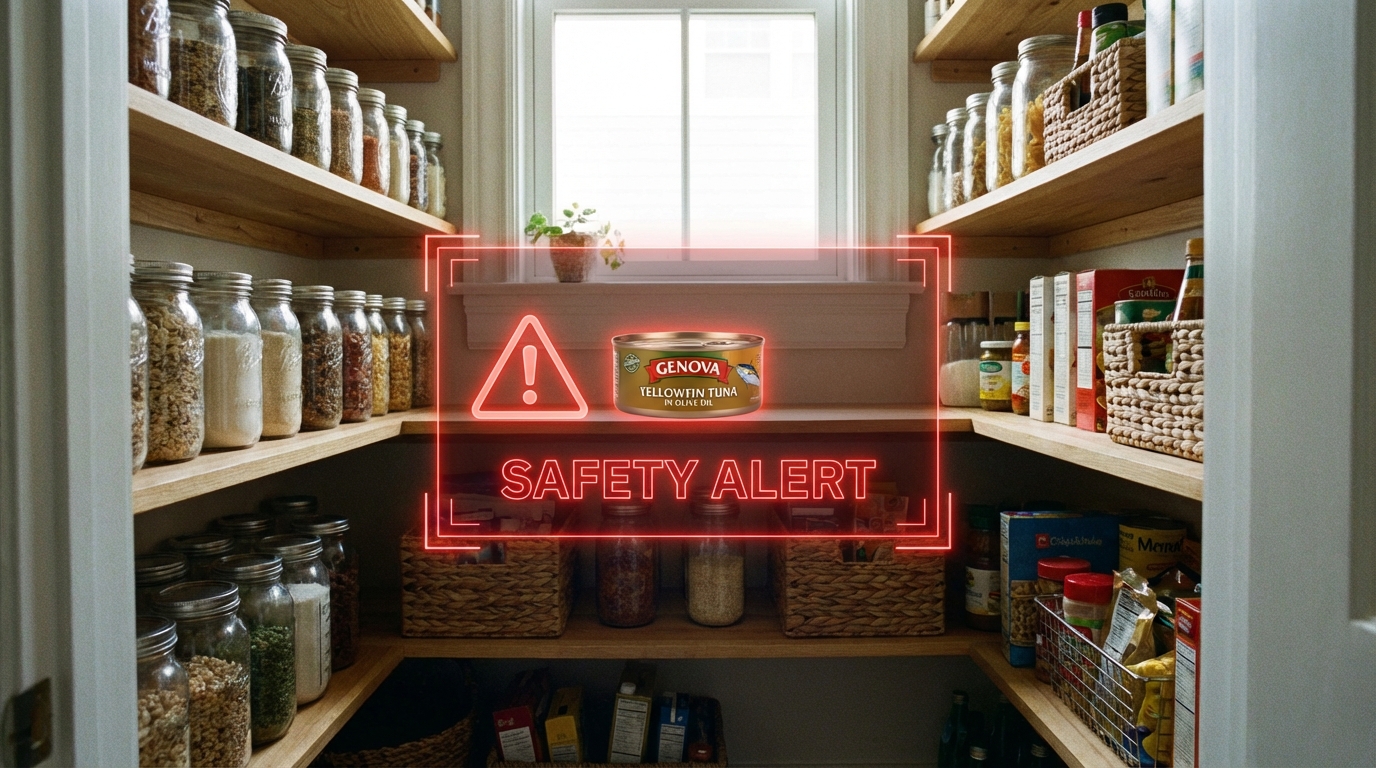
The global food supply chain is a marvel of modern logistics, but it is also a system where a single error can trigger massive financial and health consequences. This week, the market for consumer staples faced a significant jolt following the announcement of the Urgent Tuna Recall January 2026. Tri-Union Seafoods, a major player in the industry and a subsidiary of the global giant Thai Union, issued a critical update regarding its Genova brand products. The recall centers on a manufacturing defect that could lead to life-threatening botulism, serving as a stark reminder for investors that operational excellence is just as important as revenue growth in the 2026 economic environment.
Understanding the Urgent Tuna Recall January 2026 is essential for anyone managing a portfolio with exposure to the consumer defensive sector. When a previously quarantined product inadvertently reaches store shelves, it signals a breakdown in third-party logistics that can erode brand equity overnight. In this guide, we will break down the specific products affected, the economic fallout for the parent company, and how you can protect your wealth from such “Black Swan” supply chain events.
The Breakdown: Why This Recall is Different
To navigate the Urgent Tuna Recall January 2026, one must first understand the technical and logistical failure that triggered it. Unlike most food safety alerts that stem from fresh contamination, this event is the result of a “secondary distribution error” involving products that were supposed to be destroyed.
The Logistics of the Quarantined Product
In February 2025, a voluntary recall was initiated for specific Genova tuna cans after a supplier identified a manufacturing defect in the “easy open” pull-tab lids. These lids could lose their seal over time, potentially allowing the growth of Clostridium botulinum. While Tri-Union Seafoods successfully quarantined these items, a third-party distributor inadvertently released them into the retail stream in January 2026.
This lapse highlights a critical vulnerability in modern inventory management. For an investor, this suggests that the digital “firewalls” between quarantined stock and sellable inventory are not as robust as previously thought. In an era where “just-in-time” delivery is the standard, the failure of a “stop-shipment” protocol represents a systemic risk to the manufacturer’s valuation.
Health Risks: Understanding Botulism
The primary concern of the Urgent Tuna Recall January 2026 is foodborne botulism. This rare but serious illness is caused by a toxin that attacks the body’s nerves. Symptoms include difficulty swallowing, muscle weakness, and blurred vision. Because the toxin can develop in cans that show no signs of spoilage, the FDA has warned that consumers should not use the product even if it does not look or smell spoiled.
Practical Strategies: Protecting Your Portfolio from Supply Chain Risk
For the proactive investor, the Urgent Tuna Recall January 2026 provides a masterclass in risk assessment. In a 2026 economy characterized by persistent inflation and thinning retail margins, consumer staples are often viewed as a “safe haven.” However, safety events like this can turn a defensive play into a liability.
Identifying “Logistics Leaders” in the Tech Era
The best way to hedge against these events is to invest in companies that are adopting end-to-end traceability technology.
- Blockchain and IoT Integration: Look for firms using blockchain-based ledgers where every pallet of product is digitally “locked” if a recall is issued.
- 3PL Oversight: Companies that have direct, real-time data integration with their third-party logistics (3PL) providers are less likely to experience the type of “accidental release” seen in the Urgent Tuna Recall January 2026.
Framework for Evaluating Recall-Prone Stocks
If you hold shares in a food conglomerate, you should perform a “Safety Audit” using these steps:
- Check the “Recall Intensity”: Research the company’s history with the U.S. Food and Drug Administration (FDA). A pattern of recurring issues suggests systemic management failure.
- Analyze Insurance Coverage: Verify if the company carries comprehensive “Product Recall Insurance.” This can cover the costs of retrieval, destruction, and even brand rehabilitation.
- Monitor Secondary Market Churn: Watch for how quickly retailers like Meijer or Albertsons return to stocking the brand. A delay in re-stocking signals a loss of retailer confidence.
Market Insights: The Financial Cost of Recalls
The Urgent Tuna Recall January 2026 is not just a logistical headache; it has a tangible price tag. Professional analysts often use a specific model to quantify the “Reputational Loss” following such events.
Scenario: Direct vs. Indirect Costs
Let’s examine a hypothetical scenario for a mid-sized seafood parent company facing a Class I recall of this scale.
| Cost Component | Estimated Impact | Rationale |
| Direct Retrieval & Logistics | $15 Million | Transport, labor, and certified destruction of thousands of cases. |
| Inventory Write-off | $8 Million | The cost of the lost product at wholesale value. |
| Retailer Penalties | $3 Million | Fees charged by supermarkets for shelf-space disruption. |
| Brand Equity Erosion | $40 Million | Reduced sales as consumers switch to competitors like Bumble Bee or StarKist. |
The “Total Economic Loss” in this case far exceeds the value of the tuna itself. For a retail investor, the Urgent Tuna Recall January 2026 serves as a reminder that brand trust is an intangible asset that can be wiped out by a single warehouse miscommunication.
the best AI crypto projects to watch in 2026
Common Mistakes and Risks to Avoid
- Chasing “Unsafe” Yields: High-yield stocks in the food sector can be “value traps” if they are cutting corners on safety protocols to maintain dividends.
- Underestimating the 3PL Risk: Many investors focus only on the manufacturer’s plant. As this event shows, the third-party distributor is often the weakest link.
- Ignoring the “Secondary Wave” Effect: The Urgent Tuna Recall January 2026 is especially damaging because it involves a previously recalled product. This “second failure” often leads to greater regulatory scrutiny and higher fines.
- Neglecting Global Sentiment: In 2026, news of a recall travels globally in minutes. A local US recall can affect the brand’s perception in lucrative Asian or European markets.
Conclusion – Key Takeaways & Next Steps
The Urgent Tuna Recall January 2026 is a pivotal moment for the consumer defensive sector. It highlights that in our hyper-connected, high-speed economy, the “integrity of the quarantine” is a financial fundamental. While Tri-Union Seafoods works to retrieve the inadvertent shipments, investors must decide if this signals a deeper operational flaw within the parent company.
Wealth building in 2026 requires looking beyond the P/E ratio and into the actual “pipes” of the supply chain. By focusing on companies that lead in safety technology and maintain strict 3PL oversight, you can ensure your portfolio remains as resilient as the networks it tracks. The Urgent Tuna Recall January 2026 is more than a safety alert; it is a signal to re-evaluate how you measure quality in your investments.
Are you ready to audit your portfolio for supply chain risk?
Start by identifying which of your holdings rely on third-party logistics. Would you like me to help you create a “Due Diligence Checklist” to evaluate the safety protocols of your top-three consumer staples holdings?