The global food supply chain is a complex web where a single logistical error can have massive financial and health consequences. This week, the market for consumer staples faced a significant jolt following the announcement of an Urgent Canned Tuna Recall January 2026. Tri-Union Seafoods, a major player in the industry, issued a critical update regarding its Genova® brand products. The recall centers on a manufacturing defect that could lead to life-threatening contamination, serving as a stark reminder for investors that operational excellence is just as important as revenue growth.
Understanding the Urgent Canned Tuna Recall January 2026 is essential not just for safety, but for anyone managing a portfolio with exposure to the consumer defensive sector. When a previously quarantined product inadvertently reaches store shelves, it signals a breakdown in third-party logistics that can erode brand equity overnight. In this guide, we will break down the specific products affected, the economic fallout for the parent company, and how you can protect your wealth from such “Black Swan” supply chain events.
The Core of the January 2026 Tuna Recall
To navigate the Urgent Canned Tuna Recall January 2026, one must first understand the technical failure that triggered it. This isn’t a new defect but a logistical failure of a previous one. In February 2025, a recall was initiated for specific cans with faulty “easy open” pull-tab lids. However, in January 2026, it was discovered that a third-party distributor inadvertently released quarantined stock into the retail stream.
Why This Recall is Different (Inadvertent Distribution)
Most recalls are the result of a fresh discovery of contamination. In contrast, the Urgent Canned Tuna Recall January 2026 is the result of a “secondary distribution error.” This means the company had already identified the risk and isolated the product, but the “firewall” between quarantined stock and sellable inventory failed. This raises serious questions about the digital traceability and warehouse management systems used by modern food conglomerates.
Health Risks of Clostridium Botulinum
The specific risk identified in the Urgent Canned Tuna Recall January 2026 is Clostridium botulinum. This bacterium thrives in improperly sealed cans, producing a toxin that causes botulism—a rare but potentially fatal form of food poisoning. Because the defect involves a pull-tab lid that may lose its seal over time, the risk of contamination actually increases the longer the product sits in a consumer’s pantry.
Financial Strategy: How to Evaluate Recalls as an Investor
For the proactive investor, the Urgent Canned Tuna Recall January 2026 provides a masterclass in risk assessment. Tri-Union Seafoods is a subsidiary of Thai Union Group, a global titan in the seafood market. When such an event occurs, the market often overreacts, but the long-term damage depends on the company’s ability to manage “reverse logistics.”
Calculating the Direct and Indirect Costs
Professional analysts divide the impact of a recall into two categories: direct and indirect. Direct costs include the physical retrieval of the cans and the immediate loss of inventory. Indirect costs, however, involve the erosion of brand trust and potential litigation.
| Cost Component | Impact Type | Estimated Financial Weight |
| Logistics & Retrieval | Direct | ~$10 Million – $25 Million |
| Inventory Write-down | Direct | Market Value of Quarantined Stock |
| Brand Equity Loss | Indirect | 3–5% Drop in Targeted Market Share |
| Legal & Regulatory Fines | Indirect | Variable based on FDA Findings |
Market Reaction and Parent Company Performance
History shows that companies with diversified portfolios tend to weather these storms better than single-product firms. However, because the Urgent Canned Tuna Recall January 2026 involves a “premium” brand like Genova, the impact on profit margins may be more pronounced. Investors should monitor the parent company’s “Cash Flow from Operations” to see if the recall costs are being self-funded or if they require new debt.
how to evaluate dividend safety in 2026
Case Insights: The Supply Chain Vulnerability
The Urgent Canned Tuna Recall January 2026 highlights a critical vulnerability in “just-in-time” global manufacturing. As products move through third-party distributors, the manufacturer often loses direct oversight of the physical inventory.
Steps to Identifying Affected Brands Now
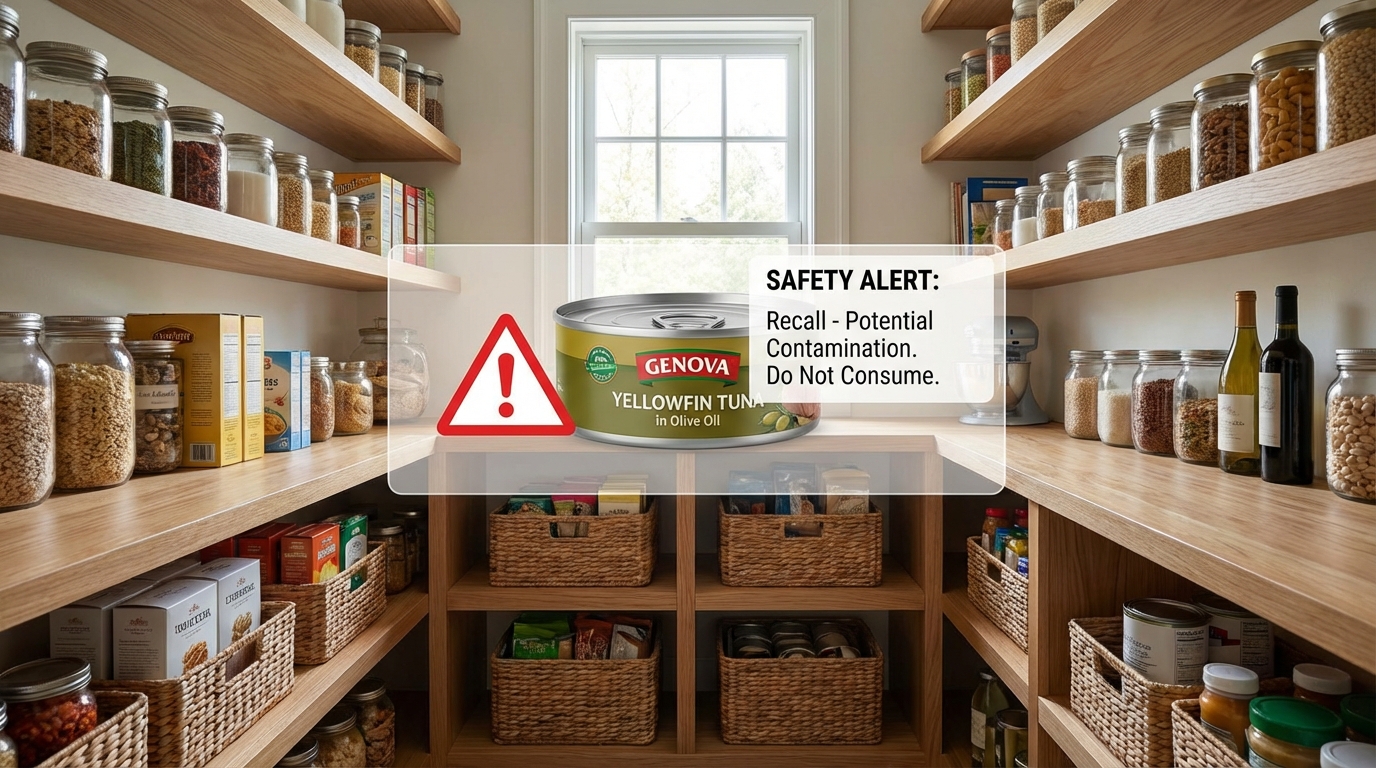
If you have Genova tuna in your pantry, you must check the bottom of the can immediately. The Urgent Canned Tuna Recall January 2026 specifically targets the following:
- Genova Yellowfin Tuna in Olive Oil (5 oz, 4-Pack): UPC 4800073265, Can Codes S84N D2L or S84N D3L, Best By Jan 2028.
- Genova Yellowfin Tuna in EVOO with Sea Salt (5 oz): UPC 4800013275, Can Code S88N D1M, Best By Jan 17, 2028.
These products were distributed to major retailers including Meijer (IL, IN, KY, MI, OH, WI), Giant Foods (MD, VA), and Safeway/Albertsons (CA). According to the World Bank, improving food safety standards in global trade is a $110 billion annual opportunity to reduce economic losses in emerging and developed markets alike.
7 AI Trading Tools That Save You 10 Hours of Trading Daily
Common Mistakes and Risks to Avoid
- Relying on “Visual” Freshness: Do not consume the product even if it smells or looks fine. Botulism toxins do not always change the appearance of the food.
- Ignoring the “Parent Company” Risk: Investors often focus only on the brand. In 2026, you must analyze the financial health of the holding company to ensure they have “Recall Insurance” to cover third-party errors.
- Missing the “Best By” Window: Because the defect causes the seal to fail “over time,” a can that is safe today may become dangerous by 2027.
Conclusion – Key Takeaways & Next Steps
The Urgent Canned Tuna Recall January 2026 is a pivotal event for the consumer defensive sector. It serves as a reminder that brand trust is the most expensive asset a company owns, yet it is often the most fragile. While the direct costs of the recall may be manageable for a giant like Thai Union, the failure of the “quarantine barrier” highlights a need for greater investment in blockchain-based supply chain traceability.
For the savvy investor, this event is a signal to audit your portfolio for “Logistics Risk.” Are the companies you own relying too heavily on unverified third-party distributors? Wealth building in 2026 requires looking beyond the P/E ratio and into the actual “pipes” of the global economy.
What is your next step?
Start by checking your pantry for the specific Genova can codes listed above. Would you like me to create a “Supply Chain Risk Checklist” to help you evaluate other consumer staples in your portfolio for similar vulnerabilities?