With the new edition of The Home Orchard now available, many gardeners are asking a new question: not just “Can I grow fruit at home?” but “Is a backyard orchard a smart financial move?” If you’re thinking about planting trees, it helps to see your yard as a potential asset and treat a backyard orchard long-term investment the same way you’d treat a small business or stock position. The New Edition of ‘The Home Orchard’: Is a Backyard Orchard a Smart Long-Term Investment? can provide valuable insights.
In this article, we’ll use the updated guidance from The Home Orchard and recent research on orchard economics to decide whether a backyard orchard can realistically boost your long-term wealth.
Backyard Orchard Long-Term Investment: Core Concept & Overview
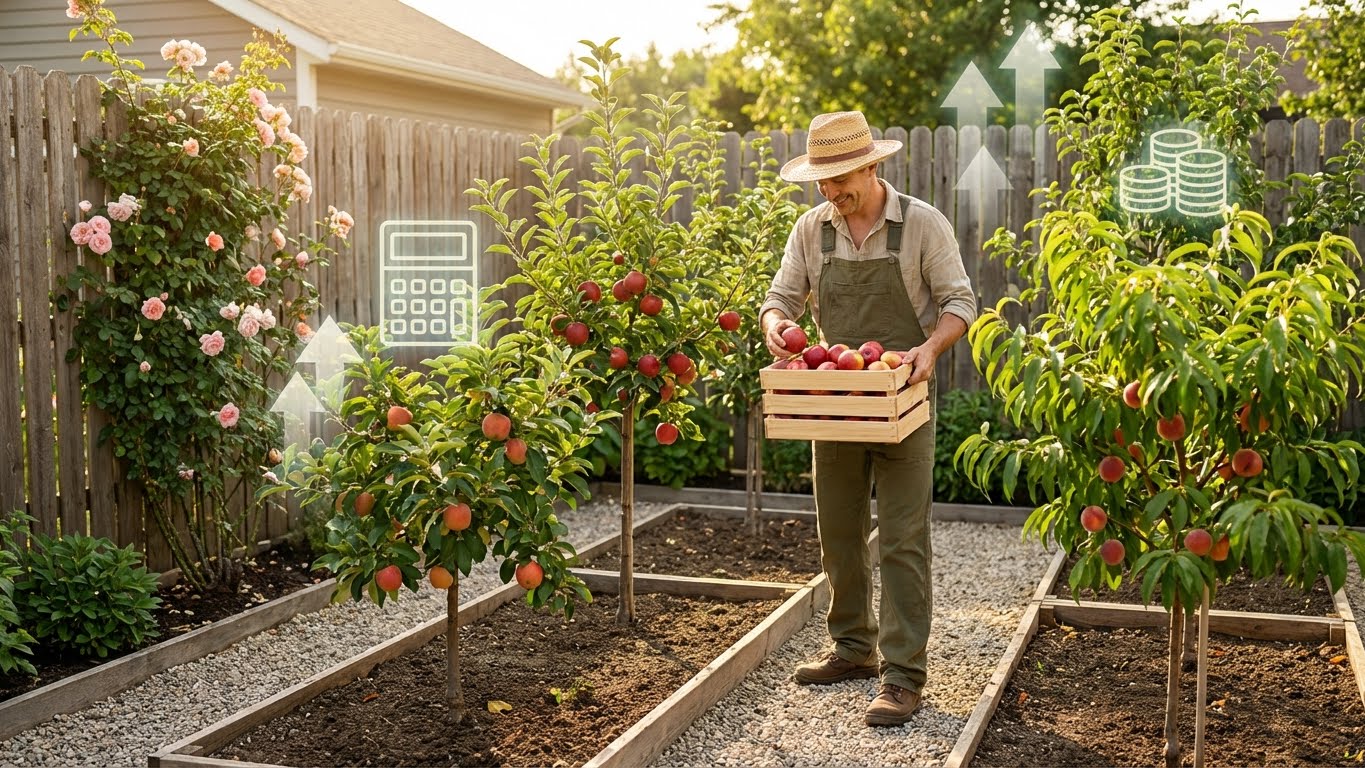
A backyard orchard combines lifestyle value (fresh fruit, beauty, self-sufficiency) with economic value (lower grocery bills, potential micro-ventures like selling surplus fruit or value-added products).
The new second edition of The Home Orchard, published by UC Agriculture and Natural Resources in 2025, is explicitly written for serious backyard orchardists and small-scale growers. It adds new content on figs, persimmons, nuts, modern irrigation, climate adaptation and integrated pest management—exactly the kind of knowledge you need to manage a backyard orchard long-term investment properly.
As you consider your options, the New Edition of ‘The Home Orchard’: Is a Backyard Orchard a Smart Long-Term Investment? should be at the forefront of your research.
Key Component 1 – What’s New in The Home Orchard (and Why It Matters Financially)
The expanded edition of The Home Orchard includes:
- Site selection and orchard design
- Modern rootstock recommendations
- Water-efficient irrigation and climate-smart practices
- Detailed pruning, grafting, and training systems
- Integrated pest management (IPM) for each crop
From an investment perspective, these topics translate into:
- Higher yields (better varieties and rootstocks)
- Lower ongoing costs (water-efficient and labor-efficient systems)
- Reduced risk (disease-resistant varieties, IPM, climate adaptation)
In other words, good horticulture is also good capital allocation. A well-designed backyard orchard can behave like a small, diversified “food ETF” that pays you in fruit and nuts for decades.
Key Component 2 – The Financial Logic of a Backyard Orchard Long-Term Investment
Tree crops are classic long-term investments: you front-load costs, wait several years, and then enjoy a stream of returns. Studies on small orchards show that profitability depends on establishment costs, yield, market access, and management efficiency.
For a home orchard, your “return” usually comes in three forms:
- Cash savings – Lower grocery bills from home-grown fruit and nuts.
- Optional income – Selling surplus produce, seedlings, or value-added products (jams, dried fruit).
- Intangible value – Food security, resilience, enjoyment, and property appeal.
Because you don’t pay yourself labor in cash (you pay in time), your hurdle rate is usually lower than a commercial grower’s. That makes a backyard orchard long-term investment more likely to pay off, as long as you plan and maintain it with discipline.
Section 2 – Practical Strategies / Framework
Strategy 1 – Design Your Orchard Like an Investment Portfolio
To treat your trees as an asset, you can model your backyard orchard the way you’d model a balanced portfolio.
Step 1: Define Your Objectives
Are you aiming for:
- Maximum food self-reliance?
- A mix of savings and small side-income?
- Primarily lifestyle and property value, with some financial upside?
Your objective will influence tree choice, density, and budget.
Step 2: Allocate “Orchard Assets”
Use The Home Orchard as your technical playbook and think in asset-allocation terms:
- Core holdings – Reliable, high-yield apples, citrus, peaches, or mangoes suited to your climate.
- Diversifiers – Berries, figs, persimmons, or nuts to spread risk across species and harvest times.
- Speculative picks – Rare or trial varieties that might do exceptionally well—or fail.
This mix gives you diversification in yield timing, disease risk, and market value, similar to mixing defensive and growth stocks.
Step 3: Budget Your Initial Capital
Major upfront costs include:
- Trees or rootstocks
- Soil preparation and amendments
- Irrigation system (drip lines, timers)
- Fencing and basic tools
A solid backyard orchard long-term investment plan sets a clear cap on Year 0–2 spending, with a realistic timeline for “break-even” via grocery savings.
Strategy 2 – Manage Cash Flow, Risk, and Time Horizon
Once the trees are in the ground, the financial game is about consistent management and realistic expectations.
Step 1: Plan a 10–20 Year Time Horizon
Tree crops are slow money. Research on apple and pear orchards shows that high-density systems can reach profitability in several years, but full potential unfolds over a decade or more.
For a home orchard, assume:
- Years 0–3: Mostly costs (planting, training, low yields)
- Years 4–7: Rising yields, partial recovery of investment
- Years 8–20+: Peak production, high “dividends” if well maintained
Step 2: Track Your Orchard Cash Flow
Even a simple spreadsheet helps you treat your orchard like an asset, not a hobby.
Example Tracking List
- Upfront: tree cost, irrigation, soil, fencing
- Annual: water, fertilizers, mulch, pest controls
- Output: kg of fruit/nuts harvested per year
- Equivalent store price per kg
- Savings = yield × store price – annual expenses
Step 3: Reduce Risk Through Knowledge and Design
The second edition of The Home Orchard emphasizes IPM, water-efficient irrigation, and climate-adaptive practices. These aren’t just “nice to have”—they directly lower your risk of catastrophic crop failure.
Key risk-reduction moves:
- Plant multiple varieties with different disease resistance and chill requirements.
- Use drip irrigation and mulch to survive hot, dry periods.
- Learn to recognize common pests and physiological disorders early.
This is how you “hedge” your backyard orchard long-term investment against weather, pests, and changing conditions.
Section 3 – Examples, Scenarios, or Case Insights
Let’s run some simple numbers to see how a backyard orchard might perform as a long-term asset. These are illustrative examples—actual results depend on your climate, management, and local prices.
Example 1 – Small Starter Orchard (6 Trees)
Setup
- 6 fruit trees (e.g., 2 citrus, 2 stone fruit, 2 apples)
- Average cost per tree + soil amendments: $50 → $300
- Irrigation hardware and tools: $200
- Total initial outlay: $500
Yield Assumptions (from Year 5 onward)
- Average mature yield: 40 kg per tree per year → 240 kg
- Local store price (equivalent quality fruit): $3/kg
- Gross “imputed value” of fruit: 240 × $3 = $720/year
- Annual cash costs (water, fertilizer, consumables): ≈ $120/year
Net annual benefit at maturity:
$720 – $120 = $600/year in grocery savings
Ignoring discounting, by Year 6 you’ve roughly recovered your $500 initial spend. Over Years 6–20, that’s potentially $600 × 15 = $9,000 in value, plus lifestyle benefits.
Example 2 – Adding a Micro-Business Layer
Suppose you scale up to 12 trees and begin selling surplus fruit and simple products (jam, dried fruit) at a local market.
- Surplus beyond family consumption: 300 kg/year
- Raw fruit sold at $2/kg → $600 revenue
- Additional processed products: net $400 profit
- Combined annual net income (after small extra costs): ≈ $800–$1,000
Now your backyard orchard long-term investment acts like a micro-enterprise, not just a cost saver. Small studies of home gardens highlight this pattern: diversified plantings that serve both home consumption and local markets can significantly support household income and food security.
Example Table – Comparing Financial Outcomes
| Scenario | Initial Cost | Mature Annual Net Benefit | Payback Period | Main Benefit Type |
|---|---|---|---|---|
| 6-tree orchard, home use only | $500 | ~$600 | ~5–6 years | Grocery savings |
| 12-tree orchard, some sales | $1,200 | ~$1,000 | ~6–7 years | Savings + micro-income |
| No orchard (all store-bought fruit) | $0 | $0 | N/A | Convenience only |
This table simplifies reality, but it shows how the combination of yield, time horizon, and modest initial spending can turn a backyard orchard into a genuine long-term asset.
Common Mistakes and Risks
Even a promising backyard orchard long-term investment can disappoint if you fall into these traps:
- Overplanting without a plan
- Planting too many trees, too close together, without thinking about pruning workload or water availability.
- Ignoring climate and site
- Choosing varieties that don’t suit your local chill hours, heat, or soil leads to poor yields and discouragement.
- Underestimating time and labor
- Pruning, thinning, and harvesting take time. If you don’t schedule them, quality and yields suffer.
- No pest or disease strategy
- Waiting until trees look “really bad” before acting can force you into expensive emergency treatments instead of low-cost prevention.
- Failure to track costs and benefits
- Without even basic notes or a spreadsheet, you won’t know whether your orchard is saving or costing you money.
- Treating it as a short-term project
- Expecting positive returns in 1–2 years leads to frustration. Orchard economics—and studies of small apple orchards—consistently show that establishment takes time before profitability.
Conclusion – Key Takeaways & Next Steps
So, is a backyard orchard long-term investment actually smart? In many cases, yes—provided you approach it with the same mindset you’d use for any other asset:
- Use high-quality information, like the new edition of The Home Orchard, to design your orchard with good varieties, rootstocks, and irrigation from day one.
- Model your trees as an asset with upfront costs, a multi-year ramp-up, and long-lived returns in the form of grocery savings and optional micro-income.
- Manage risk via diversification, climate-appropriate choices, and basic record-keeping, not by guessing.
A backyard orchard won’t replace your retirement portfolio, but it can be a profitable, inflation-resistant, and deeply satisfying complement to your financial life—especially in an environment where food prices and supply chains can be unpredictable.
If this resonates with you, your next steps are simple:
- Sketch your yard and decide how many trees realistically fit.
- Set a modest Year-0 budget and choose a starter set of “core” fruit trees.
- Start a simple spreadsheet to track costs, yields, and savings from day one.
Do that, and your backyard orchard long-term investment can evolve from a weekend project into a quiet, compounding asset that feeds both your body and your balance sheet for decades.