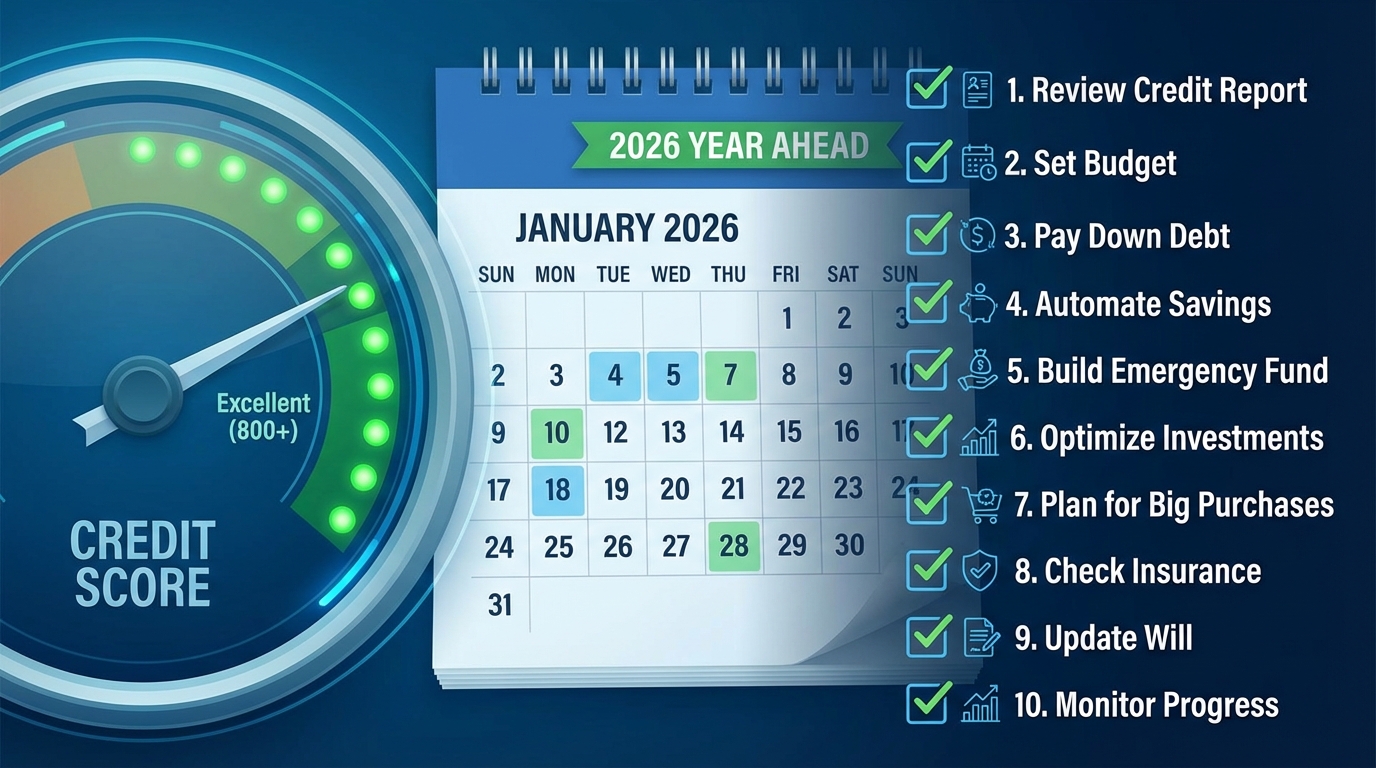
Navigating the financial landscape of the mid-2020s requires more than just a steady income; it demands a surgical approach to your credit profile. As we move through a year defined by stabilizing inflation and the rapid integration of AI-driven lending algorithms, learning how to improve your credit score in 2026 has become the ultimate “financial passport.” Whether you are planning to secure a mortgage for a new home or simply want to unlock the most lucrative rewards-bearing credit cards, your credit score is the engine that drives your borrowing power.
The modern credit environment has evolved significantly over the last two years. Lenders are increasingly looking at “trended data”—the trajectory of your balances over time—rather than just a single snapshot of your debt. In an economy where interest rates are beginning to normalize after years of volatility, a high score can save you thousands of dollars in interest over the life of a loan. In this comprehensive guide, we will explore the core mechanics of modern credit and provide a step-by-step roadmap on how to improve your credit score in 2026 to help you achieve an elite-tier rating.
The Mechanics of the 2026 Credit Profile
To successfully implement a strategy on how to improve your credit score in 2026, you must first understand the “scoring logic” of the current era. In 2026, credit scoring models like FICO 10T and VantageScore 4.0 are the industry standards. These models prioritize long-term consistency and the “velocity” of your debt repayment. Your score is essentially a risk-assessment tool used by institutions to predict the likelihood of you defaulting on a payment.
The Power of Payment History and Utilization
Payment history remains the undisputed king of the credit world, accounting for 35% of your total score. In the current economic climate, even a single 30-day late payment can stay on your report for seven years and cause an immediate drop of up to 100 points. Simultaneously, credit utilization—the amount of revolving credit you use relative to your total limits—makes up 30%. While the old rule of thumb was to stay under 30%, top-tier scorers in 2026 are increasingly keeping their utilization in the single digits (under 10%) to signal maximum fiscal responsibility.
The Rise of Non-Traditional Data
One of the most significant shifts in 2026 is the inclusion of “alternative data.” Lenders are now more willing to look at your history of rent payments, utility bills, and even subscription services to verify your reliability. This is particularly beneficial for younger investors or those rebuilding their credit, as it allows you to build a “positive footprint” without necessarily carrying a high-interest credit card balance. Understanding this shift is a vital part of knowing how to improve your credit score in 2026 effectively.
Your 2026 Credit Roadmap
Improving your score in 2026 requires a blend of traditional discipline and modern technological tools. Here is the definitive framework to elevate your credit standing this year.
Automate “Micro-Payments” to Crush Utilization
One of the most effective ways regarding how to improve your credit score in 2026 is to focus on your statement closing dates rather than just the due dates.
- The Strategy: Set up two payments per month. The first should be a “micro-payment” made three days before your statement closes to ensure a low balance is reported to the bureaus.
- The Logic: This keeps your reported utilization low, which is a major factor in the 30% utilization category. By the time your due date arrives, your “official” balance is already minimal.
Leverage Rent and Utility Reporting
In 2026, you can receive credit for the bills you are already paying. This is a “low-hanging fruit” strategy for those asking how to improve your credit score in 2026 without taking on new debt.
- Enroll in Reporting Services: Use platforms that verify your on-time rent and utility payments.
- Audit Your Profile: Ensure these accounts are showing up on all three major bureaus (Experian, TransUnion, and Equifax).
- The Result: This adds “depth” and “age” to your credit file, which accounts for 15% of your score.
Actionable Steps for Credit Mastery:
- Audit your reports monthly: Use free tools to check for “mixed files” or identity theft.
- Request limit increases (Responsibly): Boosting your available credit lowers your utilization ratio instantly.
- Maintain old accounts: Keep your oldest credit card active with a small, recurring subscription to preserve your “length of credit history.”
- Become an “Authorized User”: Piggyback on a family member’s perfect history to add immediate “seasoned” credit to your profile.
- best financial planning tools for long-term growth in 2026
- the best 0% APR credit cards for January 2026
Examples, Scenarios, or Case Insights
To truly grasp how to improve your credit score in 2026, let’s look at the real-world cost of a low score versus an elite score in the current economy.
Scenario: The $450,000 Mortgage Gap
Imagine two buyers in Al Khobar or anywhere in the global market looking at a $450,000 home with a 30-year fixed mortgage.
- Buyer A (Score 780): Qualifies for a 5.2% interest rate.
- Buyer B (Score 640): Qualifies for a 6.8% interest rate.
- The Financial Impact: Over 30 years, Buyer B will pay over $155,000 more in interest than Buyer A. This is why learning how to improve your credit score in 2026 is the highest-return “investment” you can make this year.
Case Insight: The “Thin File” Success Story
A recent graduate used rent reporting and a secured credit card to build a score from 0 to 725 in just 10 months. By early 2026, they were able to qualify for a premium travel rewards card that provided $1,500 in annual travel credits. This highlights that the strategies on how to improve your credit score in 2026 aren’t just for those in debt; they are for anyone looking to maximize their financial utility.
Common Mistakes and Risks to Avoid
- Closing Old Credit Cards: Many people think “closing a card I don’t use” is good. However, this often shortens your average account age and lowers your total available credit, which can hurt your score instantly.
- Opening Too Many Accounts at Once: In the 2026 economy, applying for multiple cards in a short window signals “credit desperation” to AI-driven algorithms. Space out your applications by at least six months.
- Ignoring the “Small Print” of Credit Repair: Be wary of companies that promise to “delete all negatives” for a fee. Real credit improvement is a result of consistent behavior, not magic.
- Failing to Audit Inaccuracies: According to the World Bank, nearly 25% of credit reports contain errors. Check yours for fraudulent accounts regularly.
Conclusion – Key Takeaways & Next Steps
Mastering how to improve your credit score in 2026 is a vital skill for anyone serious about wealth building. By automating your micro-payments, leveraging alternative data like rent reporting, and keeping your utilization in the single digits, you can transform your credit profile from a liability into a powerful asset. Remember that a high score isn’t just a number—it is the key to lower insurance premiums, better housing options, and the lowest possible interest rates in an increasingly competitive market.
Ultimately, credit health is a marathon, not a sprint. The discipline you build today by following these strategies will pay dividends for decades to come as you navigate the opportunities of the late 2020s.
Are you ready to take control of your financial future? Start by pulling your free 2026 credit reports from all three bureaus. Would you like me to create a “Credit Rebuilding Timeline” to help you reach your target score before your next major loan application?