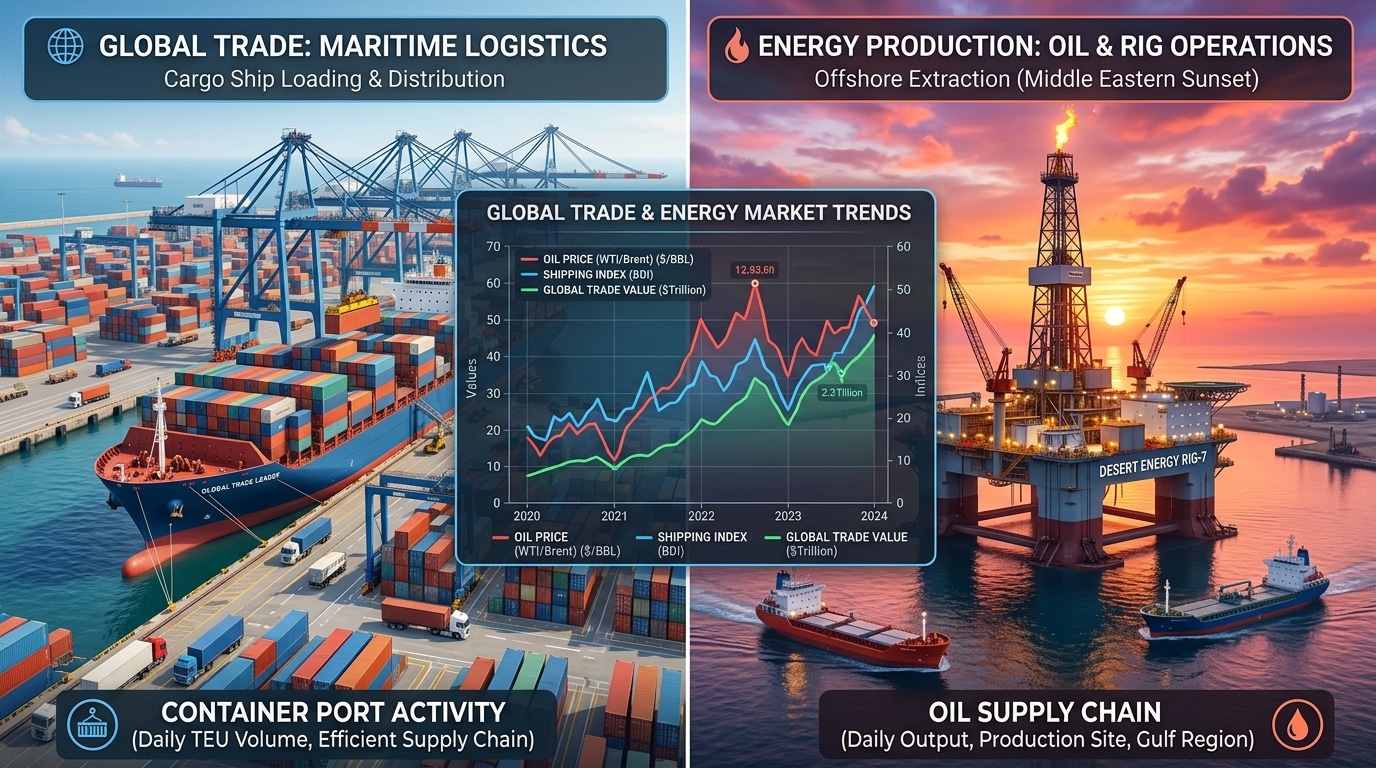
The global economic landscape in early 2026 has reached a fever pitch of complexity. As China and its neighbors scrambled to soften the blow of a disorderly trade war, a secondary crisis emerged: conflict in the Middle East. This geopolitical “double squeeze” now threatens to disrupt the oil imports that power the world’s most manufacturing-heavy economies. For investors, understanding Disorderly Trade War and Energy Security Strategies is no longer optional; it is the fundamental requirement for wealth preservation in an era of extreme volatility.
The intersection of protectionist trade policies and energy supply shocks creates a unique set of challenges for the Asian Pacific markets. While tariffs disrupt the flow of finished goods, instability in the Strait of Hormuz threatens the very fuel required to produce them. Consequently, the traditional “playbook” for Asian investing is being rewritten. This article provides a deep dive into how these two forces interact and the specific strategies you can use to position your portfolio for resilience.
How the Kevin Warsh Federal Reserve Chair Nomination Impacts Your Wealth
The Dual Crisis of 2026
To grasp the current environment, we must analyze the “Twin Pillars of Instability.” On one side, we have the “disorderly” nature of global trade. Unlike a structured negotiation, a disorderly trade war is characterized by sudden, retaliatory tariffs and the weaponization of supply chains. On the other side, we have the fragile nature of energy logistics.
The Breakdown of “Just-in-Time” Trade
The disorderly trade war has effectively ended the era of “Just-in-Time” manufacturing for China and its neighbors. Japan, South Korea, and Vietnam have found themselves caught in the crossfire of escalating duties between the East and West. This decoupling forces companies to maintain higher inventory levels, which increases costs and compresses profit margins. In this environment, Disorderly Trade War and Energy Security Strategies focus on identifying companies that can pass these costs to consumers or those that have already localized their production.
The Middle East Oil Vulnerability
While trade wars impact the output, the Middle East conflict impacts the input. China, Japan, and South Korea are among the world’s largest net importers of crude oil. Most of this energy must pass through the Strait of Hormuz or the Malacca Strait. A disruption here doesn’t just raise prices at the pump; it threatens the entire industrial electricity grid.
Therefore, energy security has shifted from an environmental goal to a national security imperative. Governments are now subsidizing massive shifts toward alternative fuels not just for “green” reasons, but to decouple their GDP from Middle Eastern instability.
Practical Strategies for the 2026 Investor
When markets are disrupted by a Disorderly Trade War and Energy Security Strategies, the first instinct for many is to flee to cash. However, inflation—driven by energy costs—can erode cash value quickly. Instead, a targeted approach to sector rotation is required.
The “Energy Independence” Portfolio
The most effective hedge against Middle Eastern oil disruption is investing in the infrastructure of the transition. This includes nuclear energy, liquefied natural gas (LNG), and high-capacity battery storage.
- Nuclear Renaissance: Japan and South Korea have recently accelerated the restarting of their nuclear reactors to lower reliance on imported oil.
- LNG Logistics: As oil becomes risky, LNG serves as the “bridge fuel.” Look for companies that own the transport vessels and regasification terminals in Southeast Asia.
- Strategic Actionable Steps: 1. Identify “midstream” energy companies with long-term fixed contracts.2. Avoid airlines and logistics firms that do not have robust fuel-hedging programs.3. Increase exposure to regional utility providers that are pivoting to domestic renewables.
Navigating Trade Disorder via “China + 1”
The “China + 1” strategy involves businesses diversifying their manufacturing base into neighbors like Vietnam, India, or Thailand to circumvent tariffs. For an investor, this means moving capital into the real estate and infrastructure of these “neighbor” economies.
Actionable Framework for Investors:
| Asset Class | Strategy in Trade War | Strategy in Energy Crisis |
| Equities | Focus on Domestic Consumption | Focus on Energy Producers/Utilities |
| Fixed Income | Inflation-Protected Securities (TIPS) | Short-duration Corporate Bonds |
| Commodities | Industrial Metals (Copper/Lithium) | Crude Oil Futures & Gold |
| Real Estate | Logistics Hubs in “Neutral” Countries | Sustainable “Green” Buildings |
Examples, Scenarios, and Case Insights
To understand the impact, let’s look at a numeric scenario involving oil price elasticity and GDP. In a typical economic environment, a 10% increase in oil prices might drag Asian GDP down by 0.3%. However, in the context of a Disorderly Trade War and Energy Security Strategies, this impact is magnified.
The “Hormuz Closure” Scenario
Imagine a scenario where a conflict in the Middle East restricts 20% of the global oil flow. In 2026, Brent crude could spike from $85 to $140 per barrel within weeks.
For a South Korean manufacturing firm, the math looks like this:
$$Cost_{Total} = Cost_{Labor} + Cost_{Materials} + (Energy_{Price} \times Consumption)$$
If $Energy_{Price}$ doubles, the firm’s net margin could drop from 12% to 4% overnight unless they have implemented Disorderly Trade War and Energy Security Strategies. Investors who spotted this risk early would have shifted their holdings into companies with “captive” energy sources—such as those with onsite solar arrays or long-term hydro-power agreements.
The “Tariff Wall” Example
Consider a Chinese EV manufacturer facing a new 45% tariff in the European market. To survive, the company must “scramble” to build a factory in Hungary or Poland. This capital expenditure (CapEx) hurts short-term dividends but secures long-term market access. As an investor, you must distinguish between the cost of the move and the value of the market share saved.
Common Mistakes and Risks to Avoid
- Chasing the Oil Spike: Many retail investors buy oil stocks after the Middle East conflict hits the news. By then, the “risk premium” is already priced in.
- Ignoring Currency Volatility: In a trade war, countries often engage in competitive devaluations. If you own stocks in a country whose currency is crashing against the USD, your “gains” may be illusory.
- Over-reliance on “Old Energy”: While oil is currently a threat, the long-term trend is still away from fossils. Don’t get trapped in “value traps” of companies that have no plan for a low-carbon future.
- Assuming “Neighbors” are Safe: Just because a country is a neighbor to China doesn’t mean it is immune to the trade war. Vietnam, for example, often faces “transshipment” investigations that can lead to sudden tariffs.
Conclusion: Key Takeaways & Next Steps
The dual threat of a Disorderly Trade War and Energy Security Strategies has created a high-stakes environment for the Asia-Pacific region. China and its neighbors are no longer just fighting for market share; they are fighting for the very resources required to stay operational. For you as an investor, the key takeaways are:
- Diversify Geographically: Move beyond “China-only” portfolios into the broader SE Asian manufacturing belt.
- Hedge Energy Risk: Use nuclear and renewable infrastructure as a defensive moat against Middle Eastern volatility.
- Monitor Trade Policy: Stay updated on regional trade agreements like the RCEP, which may provide “backdoors” to restricted markets.
The current economic weather is looking a bit spicy, but for the informed investor, volatility is simply the sound of opportunity knocking. According to the International Energy Agency (IEA), the speed of the energy transition will determine the winners of the next decade.
Would you like me to analyze a specific Asian sector, such as South Korean semiconductors or Chinese renewables, to see how they fit into this energy security framework?