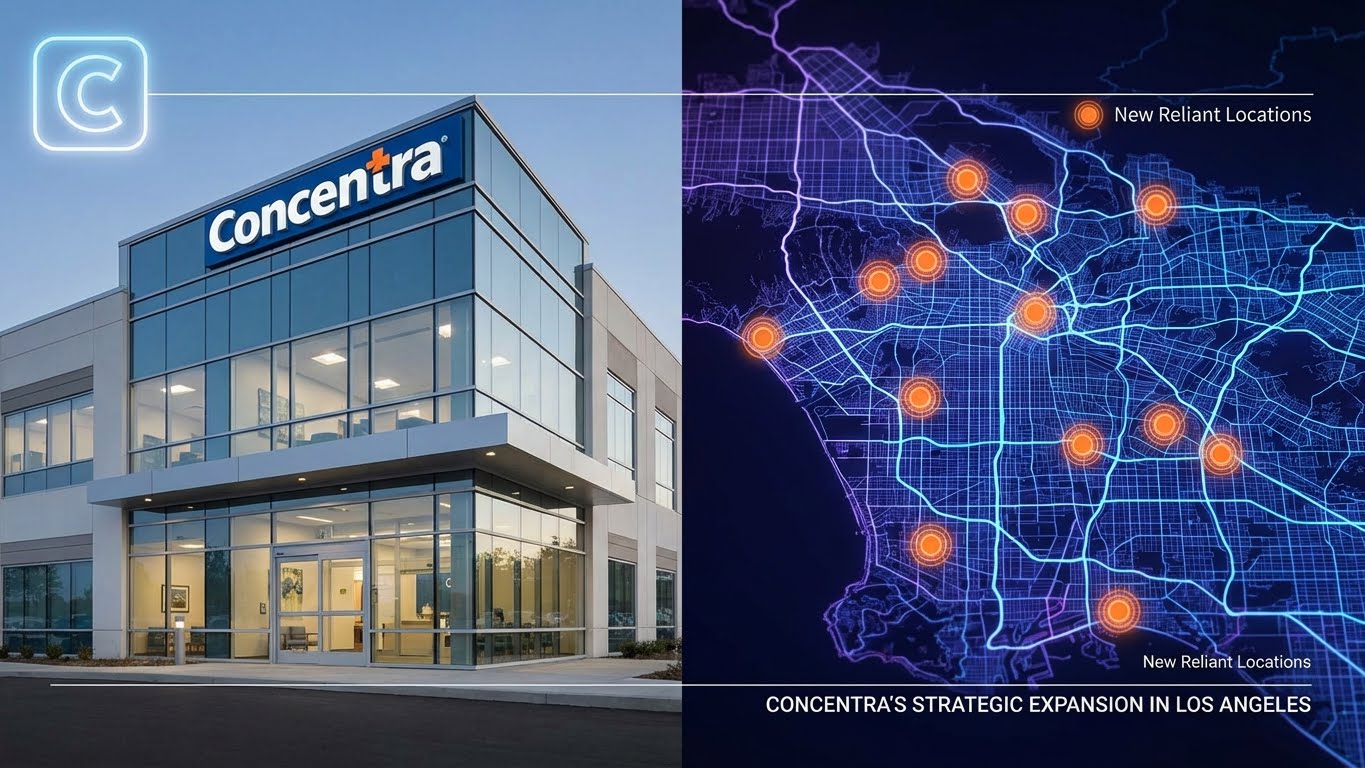
The occupational health landscape in early 2026 is witnessing a powerful wave of consolidation as industry giants move to fortify their regional dominance. On January 19, 2026, the sector reached a new milestone as Concentra acquires Reliant Immediate Care from MBI Industrial Medicine. This strategic move by Concentra, a national leader in occupational medicine, marks a significant expansion into the high-demand California market. By integrating the assets of Reliant—formerly a key brand under the MBI Industrial Medicine umbrella—Concentra is not just growing its footprint; it is fundamentally resetting the competitive bar for employer-related health services in the Los Angeles area.
For investors and healthcare stakeholders, the fact that Concentra acquires Reliant Immediate Care from MBI Industrial Medicine serves as a clear signal of the “M&A Supercycle” currently defining 2026. As corporate America grapples with “sticky” labor costs and a heightened focus on workforce resilience, the demand for streamlined, tech-enabled occupational care has never been higher. Understanding the financial and operational mechanics of this deal offers a rare glimpse into the future of healthcare investing, where scale and specialized service delivery are the ultimate currencies.
The Consolidation of Occupational Medicine
The acquisition of Reliant Immediate Care by Concentra is a classic example of “strategic density.” In a 2026 economy characterized by high interest rates and tight margins, the most resilient healthcare models are those that can achieve economies of scale while maintaining deep local penetration.
The Strategic Value of the Southern California Hub
The primary driver behind this deal is Concentra’s desire to own the Southern California occupational health corridor. By absorbing Reliant’s strategic locations—including its proximity to LAX Airport and the Downtown LA business district—Concentra is effectively capturing the “gateway” of the Western workforce. These locations serve as high-volume hubs for everything from DOT physical exams to work injury triage. In the world of healthcare investing, these specialized hubs are viewed as “defensive assets” because their revenue is tied to mandatory regulatory compliance rather than discretionary consumer spending.
MBI Industrial Medicine’s Portfolio Realignment
From the seller’s perspective, MBI Industrial Medicine (which was itself acquired by private equity firm Clearview Capital in 2020) is likely focusing its resources on its core Southwestern strongholds in Arizona and Colorado. This divestiture allows MBI to deleverage and reinvest in emerging digital health tools, such as AI-driven injury prediction, while Concentra takes over the heavy operational lift of the Los Angeles clinics. This “portfolio pruning” is a common trend in early 2026, as mid-market providers trade regional assets to focus on specialized “centers of excellence.”
Analyzing Healthcare M&A for Your Portfolio
When a market leader like Concentra acquires Reliant Immediate Care from MBI Industrial Medicine, it creates a “ripple effect” across the sector. Investors must move beyond the headlines and apply a structured framework to determine if this consolidation adds long-term value to their portfolio.
Strategy 1: The “Patient Throughput” Valuation Metric
In occupational medicine, the most critical fundamental metric is “Revenue per Visit” (RPV) combined with “Visits per Day.”
- Analyze Historical RPV: Concentra has historically seen RPV growth of 4% to 5% annually. Check if the newly acquired Reliant clinics are operating at or above this benchmark.
- Evaluate Utilization Rates: Look for clinics with a high “capture rate” of nearby manufacturing or logistics hubs. A clinic near LAX, like the one Concentra just acquired, has a built-in moat due to the constant churn of the logistics workforce.
Strategy 2: Assessing Digital Integration and Telemed Synergy
In 2026, a physical clinic is only as good as its digital backend. Concentra’s ability to integrate Reliant’s patient data into its proprietary “Concentra Telemed” platform is a massive “synergy” play.
- Telemedicine Adoption: For minor work injuries, telemedicine can reduce costs by 30% compared to in-person visits.
- Unified Records: A unified electronic health record (EHR) allows a worker injured in LA to have their follow-up care handled seamlessly in any of Concentra’s 625+ nationwide locations.
Actionable Steps for Investors:
- Monitor Post-Merger Churn: Watch the first two quarters of 10-Q filings. If patient volume dips after the rebranding to Concentra, it could indicate a loss of local physician-to-employer trust.
- Track Regional Concentration: Use the Concentra medical center locator to map how the new LA locations interact with existing centers. Overlap can lead to cost-saving “mergers” of smaller clinics.
- Review Capex Allocation: Ensure that Concentra is reinvesting in the newly acquired facilities. Neglected equipment can lead to a long-term “quality-of-care” discount in valuations.
The LA Reset
To illustrate how Concentra acquires Reliant Immediate Care from MBI Industrial Medicine impacts the local market, let’s look at a comparative scenario of two logistics companies in Los Angeles.
Scenario: The Logistics Hub Pivot
Imagine a scenario where a major shipping company at LAX previously used Reliant for all its pre-employment drug screenings.
| Metric | Pre-Acquisition (Reliant) | Post-Acquisition (Concentra) |
| Service Scope | Local Urgent Care Focus | National Occupational Medicine Focus |
| Technology | Local Patient Portal | Concentra Telemed & Integrated Reporting |
| Network Reach | Los Angeles Only | 625+ Nationwide Locations |
| Cost Efficiency | Mid-Tier | High (Due to scale) |
In this scenario, the employer gains “National Interoperability.” A driver screened at the LAX location can now have their DOT physical data accessed by their dispatcher in New Jersey via Concentra’s national portal. This efficiency is the “Untold Strategy” that makes Concentra the preferred choice for Fortune 500 employers, ultimately driving higher shareholder returns.
According to reports from the International Monetary Fund (IMF), the global trend toward “Integrated Care Models” is the primary driver of healthcare profitability in 2026. By absorbing Reliant, Concentra is effectively implementing this model in the heart of the world’s 5th largest economy (California).
Most People Never Make a Financial Plan Like This
Common Mistakes and Risks to Avoid
- Chasing “Growth for Growth’s Sake”: Acquisitions often fail if the culture of the acquired clinics clashes with the corporate giant. Watch for “clinician burnout” metrics in the new Los Angeles locations.
- Ignoring the “AI Threat”: In 2026, AI-driven wellness apps and wearables are reducing work injury rates. If injury frequency drops significantly, the “pay-per-visit” model of traditional clinics could face headwinds.
- Overlooking Regional Competition: While Concentra acquires Reliant Immediate Care from MBI Industrial Medicine, smaller “boutique” providers like Express Medicals are gaining share through hyper-personalized mental health and fatigue management services.
- Neglecting Regulatory Shifts: Healthcare is the most regulated sector in the U.S. A single shift in workers’ compensation fee schedules in California can wipe out the projected “alpha” of a new acquisition.
- Underestimating Integration Costs: Moving Reliant’s legacy data into Concentra’s ecosystem isn’t free. High “One-Time Integration Charges” can mask poor underlying performance for the first 12 months.
Conclusion – Key Takeaways & Next Steps
The news that Concentra acquires Reliant Immediate Care from MBI Industrial Medicine is a defining moment for the 2026 healthcare market. It highlights a shift toward “National Scale” over “Regional Niche” and reinforces Concentra’s position as the undisputed leader in America’s workforce health. For the investor, this deal provides a clear roadmap: look for “defensive” healthcare assets that prioritize efficiency, digital integration, and regulatory-driven revenue.
Stability in 2026 is found in “Essential Infrastructure.” Occupational medicine is exactly that—the infrastructure that keeps the American engine running.
Would you like me to help you analyze Concentra’s latest Q4 financial guidance to see how these new Los Angeles locations will impact their 2026 EBITDA projections? Explore our further resources to stay updated on the latest M&A trends and wealth-building strategies in the healthcare sector.