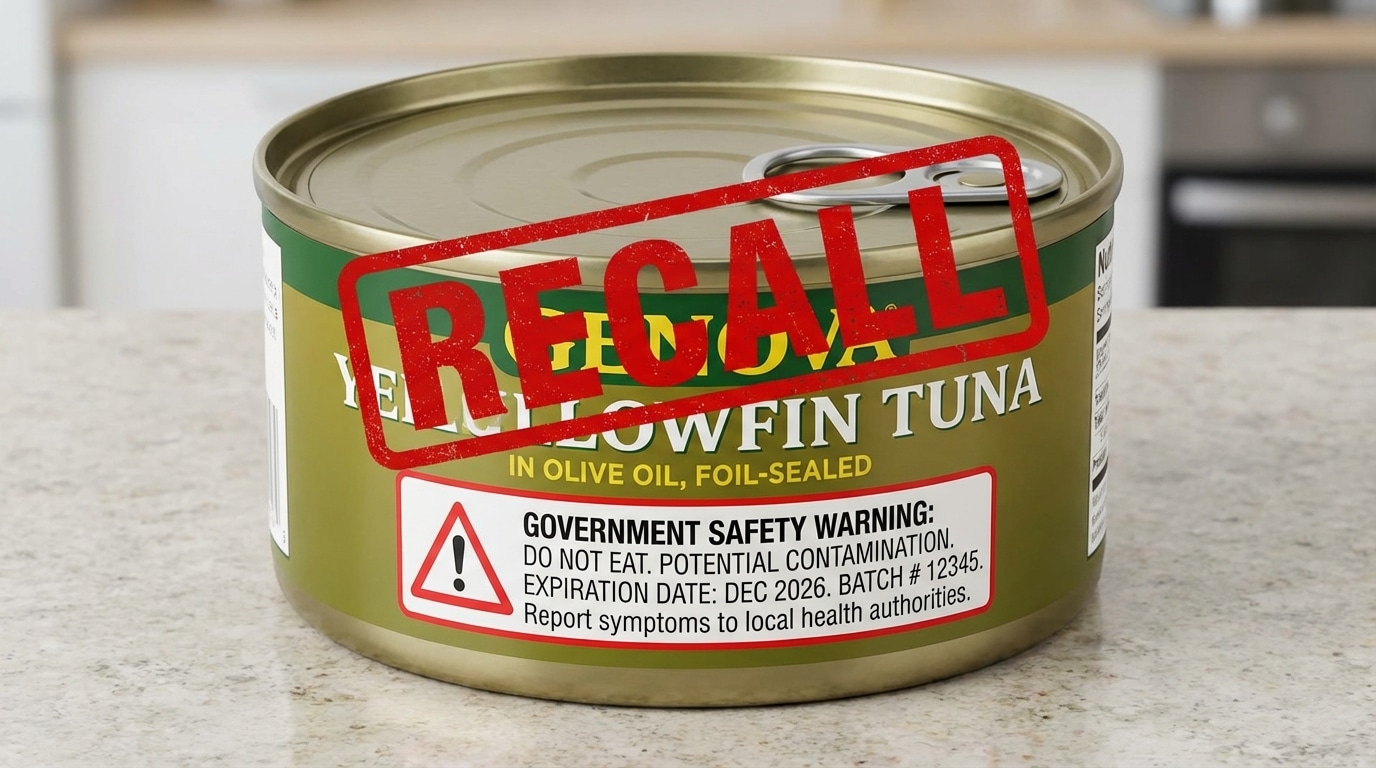
A massive health alert has been issued for millions of shoppers across the United States. Federal regulators have confirmed a significant canned tuna recall January 2026 involving several major grocery chains. This safety alert, published by the FDA on January 19, 2026, stems from a critical logistics error where previously quarantined products were accidentally shipped to retail shelves. Consumers are being urged to stop using the affected tuna immediately, as a manufacturing defect in the cans could lead to severe, life-threatening food poisoning.
The current situation is particularly alarming because it involves a redistribution of products originally pulled from circulation in early 2025. Due to the high risk of botulism, anyone who purchased Genova brand yellowfin tuna recently must verify their can codes and UPCs. In this guide, we will break down the specific stores affected, the health risks involved, and the broader financial implications of this supply chain failure.
The Botulism Risk in the 2026 Recall
The canned tuna recall January 2026 is not a new production issue, but rather a “secondary” recall caused by an inadvertent shipment of quarantined stock. Tri-Union Seafoods, the parent company, discovered that a third-party distributor mistakenly released cases that were supposed to be destroyed following a February 2025 recall. The core issue remains a manufacturing defect in the “easy open” pull-tab lids that can compromise the product seal over time.
Clostridium Botulinum Contamination
The primary concern cited by the FDA is the potential for Clostridium botulinum contamination. When a can’t seal is compromised, oxygen is kept out while moisture remains, creating the perfect anaerobic environment for botulinum spores to grow. This bacterium produces one of the most potent neurotoxins known to science, leading to a rare but often fatal illness. Unlike many other foodborne pathogens, this toxin can exist in food that looks, smells, and tastes perfectly normal.
The Logistics Failure
This recall update highlights a significant vulnerability in modern food logistics. The fact that quarantined, dangerous goods were able to re-enter the retail stream a year after the initial alert points to a breakdown in tracking and inventory management. For investors, this represents a “governance risk,” as it exposes potential liabilities within third-party distribution networks that can damage a brand’s reputation and lead to costly litigation.
Long-Term Investing Mindset: Why Most People Never Build Real Wealth
Practical Strategies: How to Identify Recalled Tuna
Identifying the products in this canned tuna recall January 2026 is essential for your safety. The recall is limited to specific batches of Genova brand tuna sold in nine states. If you have tuna in your pantry purchased from Meijer, Giant Foods, or several California-based grocers, you must perform a manual check of the codes printed on the bottom of the can.
Step-by-Step Product Verification
To determine if your tuna is safe, follow these steps to verify the UPC and Can Code:
- Check the Brand: The primary brand involved in this January update is Genova.
- Locate the UPC: Look for the 10-digit barcode on the packaging.
- Find the Can Code: This is usually stamped in ink on the bottom of the tin.
- Verify the Best-By Date: The recalled products have dates stretching into early 2028.
Affected Retailers and States
The recalled tuna was mistakenly shipped to the following stores and states:
- Meijer: Locations in Illinois, Indiana, Kentucky, Michigan, Ohio, and Wisconsin.
- Giant Foods: Locations in Maryland and Virginia.
- Safeway, Albertsons, Vons, and Pavilions: Locations in California.
Recalled Product Specifications
| Product Description | UPC Code | Can Code(s) | Best If Used By |
| Genova Yellowfin Tuna in Olive Oil (5 oz 4-pack) | 4800073265 | S84N D2L / S84N D3L | 1/21/2028 / 1/24/2028 |
| Genova Yellowfin Tuna in EVOO with Sea Salt (5 oz) | 4800013275 | S88N D1M | 1/17/2028 |
Expert Reviews of algosone.ai: The 2026 Guide to AI-Driven Wealth Building
Financial Implications and Market Reaction
The canned tuna recall January 2026 is expected to have a measurable impact on the consumer staples sector. When a brand like Genova—which markets itself as a premium, high-quality option—suffers a repeated safety failure, consumer trust evaporates quickly. Investors should watch for “brand contagion,” where shoppers avoid all products from the same parent company out of fear.
Market Sentiment and Supply Chain Costs
Historically, food recalls of this scale can cost companies between $10 million and $100 million in direct costs, including retrieval, disposal, and legal fees. However, the indirect costs of lost market share are often much higher. In 2026, with the “One Big Beautiful Bill Act” (OBBBA) focusing on stricter domestic manufacturing standards, companies failing to maintain secondary containment and quarantine protocols may face higher insurance premiums and stricter regulatory audits from the FDA.
Investor Strategy: The “Safety Alpha”
Savory investors are increasingly looking for “Safety Alpha”—outperformance driven by companies with superior quality control and transparent supply chains. As this recall ripples through the market, we may see a rotation of capital away from companies with fragmented third-party distribution models and toward those with integrated “seed-to-shelf” tracking systems. If you hold shares in major retail conglomerates, ensure you are auditing their “recall response” protocols to mitigate long-term portfolio risk.
Common Mistakes and Health Risks to Avoid
- Trusting the “Sniff Test”: You cannot see, smell, or taste the toxin that causes botulism. Never assume a can is safe because it looks normal.
- Ignoring the Symptoms: Botulism symptoms typically appear within 12 to 36 hours. If you experience blurred vision, drooping eyelids, or trouble swallowing after eating tuna, seek emergency medical care immediately.
- Failing to Return for Refund: Do not just throw the product away if you want a refund. Most retailers require the physical can (or a photo of the codes) to process a full reimbursement.
- Consuming “Dented” Cans: While the current recall is about a lid defect, any dented or swollen can should be treated with extreme caution as it indicates a compromised seal.
- Underestimating the Toxin: Botulism is a rare but potentially fatal form of food poisoning. It is a medical emergency that requires an antitoxin for treatment.
Conclusion – Key Takeaways & Next Steps
The canned tuna recall January 2026 is a stark reminder that even the most trusted household staples can carry significant risks. By checking your pantry for Genova Yellowfin Tuna with the UPCs 4800073265 and 4800013275, you can protect yourself and your family from the severe threat of botulism. This logistics error underscores the importance of staying informed through official FDA channels and the value of investing in companies that prioritize rigorous quality control.
In summary, do not consume any tuna that matches the descriptions above. Stability in your kitchen—and your portfolio—is built on a foundation of safety and due diligence.
Would you like me to help you draft a formal “Request for Refund” letter or a claim for a retrieval kit to send to Tri-Union Seafoods? Explore our further resources to stay updated on the latest consumer safety alerts and wealth-building strategies.