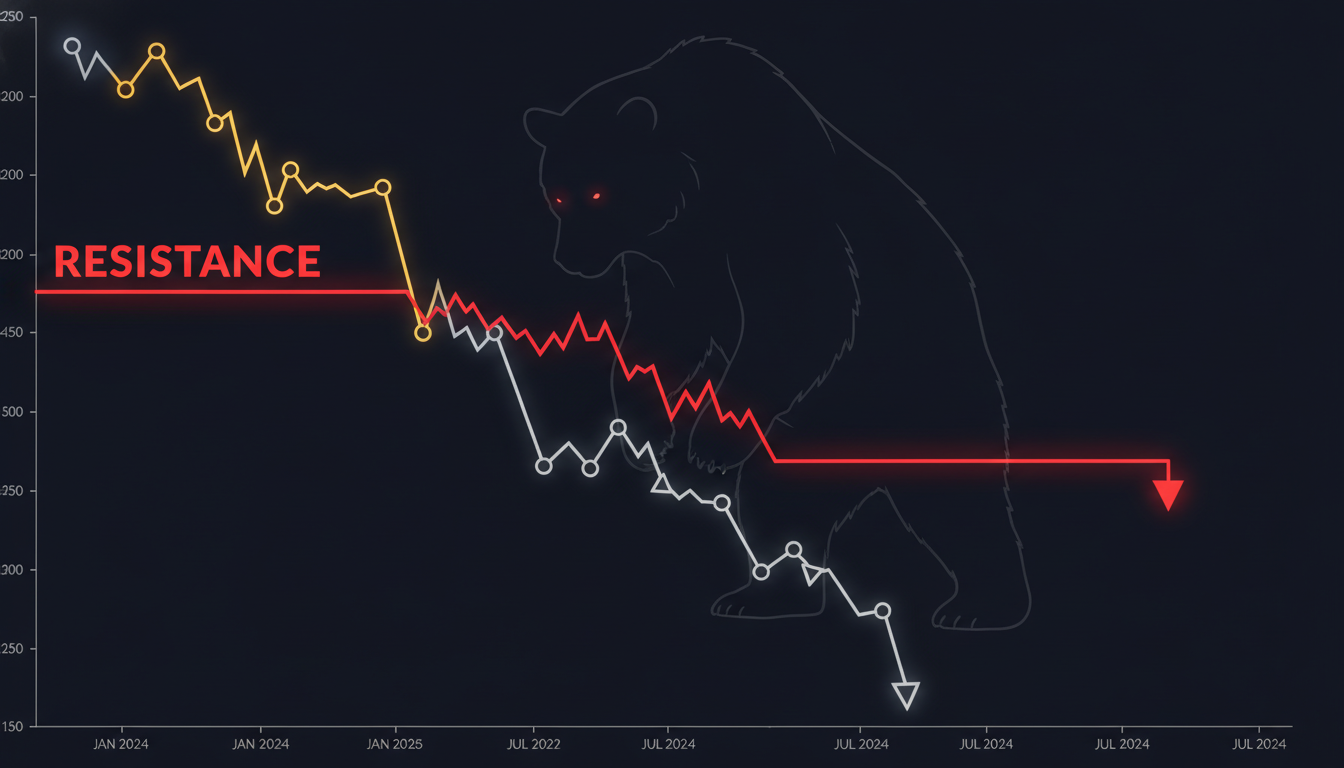
The precious metals market has long been a sanctuary for those seeking safety during economic turbulence. However, recent price action in early 2026 has sent a chilling message to bulls across the globe. We are currently witnessing a significant bearish signal from gold and silver that suggests the “higher for longer” rally may finally be losing its steam. For investors who have grown accustomed to the safety of hard assets, this shift requires a sober assessment of portfolio risk. If the technical floors begin to crack, the transition from a parabolic run to a sustained correction could happen faster than most retail traders anticipate.
Decoding the Current Bearish Signal from Gold and Silver
To understand what comes next, we must first define the nature of the current market rejection. A bearish signal in commodities isn’t just about a single day of red candles; it is a convergence of technical exhaustion and shifting macroeconomic fundamentals.
In the current 2025-2026 economic cycle, we have seen central banks successfully stabilize inflation in several major economies. Consequently, the “inflation hedge” narrative that propelled gold to record highs is beginning to face scrutiny. When gold and silver break below their 50-day and 200-day moving averages simultaneously, it often indicates that the “smart money” is rotating out of defensive positions and back into risk-on assets or high-yield cash equivalents.
Fed Policy and Gold and Silver Trends: What 2026 Investors Need to Know
echnical Divergence and Overextension
One of the most prominent aspects of this bearish signal from gold and silver is the bearish divergence seen on the Relative Strength Index (RSI). While prices attempted to make new highs earlier this month, the RSI failed to follow, indicating a loss of momentum. This “exhaustion” is typical after a parabolic run where the market becomes top-heavy with speculative buyers who lack the conviction to hold through a 10% or 20% drawdown.
The Resurgent U.S. Dollar and Real Yields
Furthermore, we cannot ignore the role of the U.S. Dollar. In late 2025 and into 2026, the dollar has shown unexpected resilience. Because gold and silver are denominated in dollars, a stronger Greenback makes these metals more expensive for international buyers. Additionally, as real interest rates (the nominal rate minus inflation) stay positive, the opportunity cost of holding non-yielding assets like silver and gold increases. This fundamental pressure is a primary driver behind the current bearish signal from gold and silver.
Practical Strategies for a Bearish Metals Market
When the technicals turn sour, the worst thing an investor can do is “hope” the price returns to previous highs. Instead, you need a proactive framework to navigate the downward pressure. Whether you are a long-term stacker or a short-term trader, these strategies can help you preserve capital.
The “Tiered Exit” and Cash Accumulation
If you are sitting on significant gains from the 2024-2025 rally, now is the time to consider taking profits. A tiered exit strategy involves selling a portion of your position (e.g., 20-30%) when a major support level is breached. This ensures that even if the bearish signal from gold and silver leads to a deeper correction, you have locked in gains and increased your cash “dry powder” to buy back at much lower valuations.
Defensive Hedging via Inverse ETFs
For those who do not want to sell their physical metal due to tax implications or long-term belief, hedging is an excellent alternative. You can use inverse ETFs that gain value when gold or silver prices fall. This acts as a temporary insurance policy during the correction phase.
Actionable Steps for Investors:
- Identify Support Levels: Watch the $2,300 level for gold and the $28 level for silver. A weekly close below these points confirms the bearish trend.
- Monitor the Fed: Pay close attention to the Bank for International Settlements (BIS) reports on global liquidity, as any tightening will accelerate the metals’ decline.
- Rebalance toward Value: Shift a portion of your metals allocation into dividend-paying value stocks that offer cash flow during periods of price stagnation.
- Avoid “Catching the Knife”: Do not buy the first 5% dip. Wait for a “base” to form over several weeks before adding to your position.
Portfolio Scenarios and Numeric Realities
To visualize the impact of a bearish signal from gold and silver, let’s look at how a hypothetical $100,000 precious metals portfolio might behave during a 20% correction—a standard “mean reversion” after a parabolic peak.
| Asset | Allocation | Peak Value | Correction (-20%) | Strategy Result (with Hedging) |
| Gold (Physical/ETF) | $70,000 | $70,000 | $56,000 | $63,000 (with 10% hedge) |
| Silver (Physical/ETF) | $30,000 | $30,000 | $24,000 | $27,000 (with 10% hedge) |
| Total Wealth | $100,000 | $100,000 | $80,000 | $90,000 |
In this scenario, a passive investor loses $20,000 in paper wealth. However, an investor who recognizes the bearish signal from gold and silver and implements a 10% inverse hedge or moves a portion to cash can mitigate 50% of that drawdown. This protection allows you to remain emotionally calm while others panic, positioning you to be a buyer when the market eventually reaches “extreme oversold” conditions.
Real-Life Application: The 2026 Re-entry Point
Imagine silver drops from $34 to $26 following this bearish signal. By holding cash, you increase your purchasing power significantly. At $26, your “dry powder” buys roughly 30% more ounces than it did at the peak. This is how true wealth is built: by respecting the bearish signals and waiting for the value to return.
Navigating a falling market is often more difficult than a rising one because of the “endowment effect”—our tendency to overvalue things we already own. Avoid these common pitfalls:
- Averaging Down Too Early: Many investors keep buying as the price falls, only to run out of cash before the actual bottom is reached.
- Ignoring the Gold-to-Silver Ratio: During a bearish phase, silver typically falls faster than gold. If you see a bearish signal from gold and silver, being over-leveraged in silver is particularly risky.
- Falling for “Fake-Out” Rallies: Bear markets are famous for “dead cat bounces”—brief price spikes that trap buyers before the next leg down.
- Neglecting Macro Trends: If 2026 continues to see high productivity and technological growth, the need for “crisis hedges” like gold naturally diminishes.
The appearance of a bearish signal from gold and silver is not a reason for despair, but it is a definitive call for caution. The market is telling us that the previous phase of easy gains is over and that a period of consolidation or correction is now the path of least resistance. By understanding the technical divergence and the pressure from real yields, you can stay one step ahead of the herd.
In summary, prioritize capital preservation. Re-evaluate your stop-losses, consider taking partial profits, and keep a close eye on the U.S. Dollar. The most successful investors are those who can pivot their strategy when the data changes.
Are you ready to adapt your portfolio? [Subscribe to our newsletter] for weekly technical deep-dives on commodity trends, or explore our other guides to stay informed on the shifting 2026 economic landscape. Recognizing a bearish signal from gold and silver today could be the move that saves your retirement nest egg tomorrow.