In the fast-paced world of consumer staples, a product recall is often viewed as a temporary operational hiccup. However, the 2026 tuna recall involving the Genova brand has sent shockwaves through the financial sector due to one specific, deeply concerning detail: the breakdown of the “quarantine barrier.” On January 19, 2026, Tri-Union Seafoods revealed that thousands of cans of tuna—initially recalled and quarantined in February 2025 due to a life-threatening botulism risk—were inadvertently released back into the retail market by a third-party distributor.
For investors and personal finance enthusiasts, this isn’t just a health story; it is a critical lesson in “Supply Chain Contagion.” When a quarantined product re-enters the marketplace nearly a year later, it signals a systemic failure in the logistical safeguards that protect both consumers and shareholder value. In this article, we will dissect the financial implications of this lapse, provide a framework for navigating “recall risk” in your portfolio, and explain why the 2026 tuna recall is a landmark case for modern risk management.
The Anatomy of a Systemic Logistics Failure
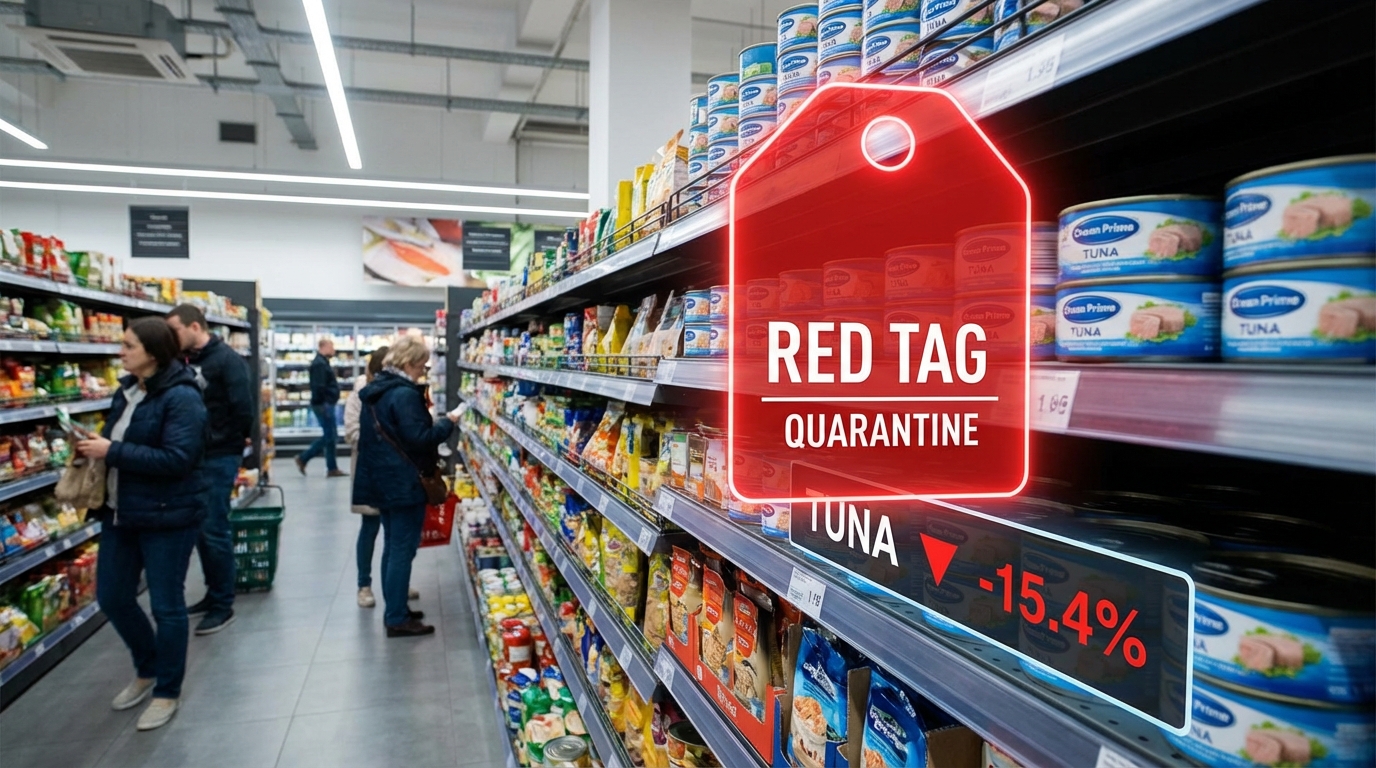
To appreciate why the 2026 tuna recall is unique, one must understand the standard procedure for a high-risk food recall. Typically, when a defect is found—in this case, a manufacturing flaw in the “easy-open” pull-tab lids—products are “red-tagged” and moved to a secure quarantine zone within a warehouse to await destruction.
The Breakdown of the Quarantine Barrier
The alarming “detail” in the 2026 event is the accidental redistribution of these red-tagged items. A third-party distributor inadvertently shipped these cases to major retail chains, including Meijer, Giant Foods, Safeway, and Albertsons. This suggests that the digital and physical “firewalls” meant to isolate dangerous inventory failed. For an investor, this highlights a massive hidden risk: you aren’t just betting on the manufacturer’s quality control, but also on the digital integrity of every warehouse in their supply chain.
The Botulism Threat and Liability
The health risk associated with the 2026 tuna recall is Clostridium botulinum, a bacteria that can thrive in improperly sealed cans. Botulism is a rare but potentially fatal form of food poisoning that attacks the nervous system. From a financial perspective, a “Class I” recall (the most serious category) carries significantly higher legal and regulatory liability than a standard labeling error.
Practical Strategies: Auditing Your Portfolio for Recall Risk
As an investor, you cannot predict when a 2026 tuna recall will occur, but you can build a framework to mitigate the damage. In a 2026 economic environment characterized by thinning margins and high logistical complexity, “Consumer Defensive” stocks are not as bulletproof as they once were.
Step 1: Evaluating “Supply Chain Transparency”
When researching consumer staples, look for companies that are investing in “Blockchain Traceability.” These systems create an immutable ledger that makes it mathematically impossible for a quarantined product to be scanned and shipped to a retailer.
- Actionable Step: Check the annual report’s “Risk Factors” or “ESG” section for mentions of automated inventory locks or end-to-end traceability software.
Step 2: Calculating the “Recall-to-Revenue” Ratio
A major recall can cost a company between $10 million and $100 million in direct costs. For a small-cap firm, this is a bankruptcy event. For a giant like Thai Union (parent of Tri-Union Seafoods), it is a manageable hit to earnings but a significant blow to brand equity.
- Framework for Assessment:
- Direct Cost Estimate: Retrieval, destruction, and retailer penalties.
- Legal Reserve: The amount set aside for potential class-action lawsuits.
- Revenue Churn: The estimated drop in sales as consumers switch to competitors like StarKist or Bumble Bee.
Actionable Steps for Investors:
- Diversify your staples: Don’t let a single brand account for more than 5% of your total equity portfolio.
- Monitor 3PL Exposure: Be aware if a company relies heavily on third-party logistics (3PL) providers, as these are often the weakest links in the safety chain.
- how to evaluate dividend safety in 2026
Market Scenarios: The Financial Cost of a Second-Wave Recall
The 2026 tuna recall is technically a “second-wave” event. Markets typically forgive a first-time error, but they are much harsher on a “failure of a fix.”
Scenario: The Brand Equity Erosion
Imagine you hold shares in a diversified food conglomerate. When the 2026 tuna recall news breaks, the immediate reaction is a 1–2% drop in stock price. However, the long-term risk is “Brand Decay.”
| Financial Impact Metric | Expected Outcome | Rationale |
| Immediate Stock Price | -1.15% to -2.0% | Standard reaction to a Class I health hazard. |
| Logistics Remediation | $15M – $30M | The cost of hiring specialized retrieval teams in 9 states. |
| Brand Preference Gap | -5% Market Share | Consumers in affected states may avoid the brand for 6–12 months. |
In this scenario, the “alarming detail” of the quarantine failure adds a “competency discount” to the stock. Analysts may lower the company’s valuation multiple because the management can no longer guarantee that their “quarantines” actually work.
Common Mistakes and Risks to Avoid
- Buying the “First” Dip: Don’t rush to buy a stock the day a recall is announced. Often, the full geographical extent of the 2026 tuna recall takes 4–5 days to be fully reflected in the price.
- Ignoring the “Hidden” Liability: A recall for a pull-tab defect is more expensive than a labeling error because the physical product must be destroyed, not just relabeled.
- Trusting “Maintenance” Over “Innovation”: In 2026, a company that only “maintains” its safety standards is falling behind. Look for those innovating with IoT sensors and real-time seal testing.
Conclusion – Key Takeaways & Next Steps
The 2026 tuna recall is a defining moment for the seafood industry and a cautionary tale for the global supply chain. The alarming detail of quarantined products reaching store shelves is a reminder that in our hyper-connected economy, “safety” is only as strong as the weakest digital link. For investors, this event underscores the importance of looking beyond dividends and into the operational “pipes” of the companies you own.
Wealth building in 2026 requires a “defensive-offensive” mindset. Protect your downside by avoiding companies with systemic logistics failures, and take the offensive by investing in the safety technologies that will prevent the next 2026 tuna recall.
Are you concerned about the stocks in your pantry?
Start by auditing your portfolio for companies with high 3PL reliance and low traceability scores. Would you like me to help you create a “Supply Chain Risk Scorecard” for the top-three consumer staples in your current watchlist?