
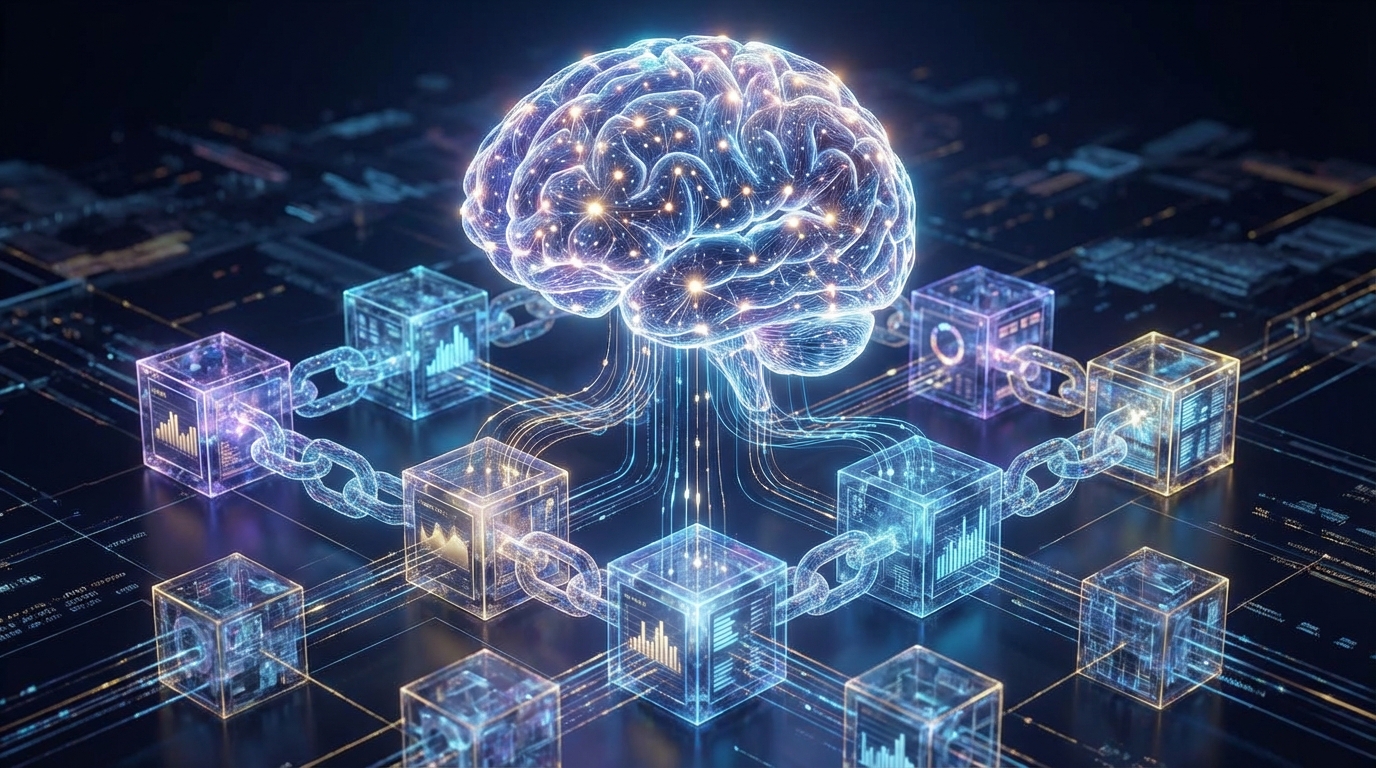
The convergence of machine intelligence and blockchain technology has reached a tipping point, fundamentally altering how we perceive liquidity, risk, and asset management. In early 2026, the impact of AI on decentralized finance (DeFi) is no longer a speculative forecast; it is the primary driver of capital efficiency across global markets. As traditional financial institutions scramble to integrate “Agentic AI” into their legacy systems, the decentralized world has already moved toward a self-optimizing, autonomous architecture. For investors seeking to build long-term wealth, understanding these shifts is essential to maintaining a competitive edge in a hyper-automated economy.
This transformation is not merely about faster trading bots. It is about the “agentic” shift—where AI acts as an active participant rather than a passive tool. From predictive liquidity provisioning to autonomous risk-adjusting smart contracts, the synergy between these two technologies is creating a more resilient and inclusive financial ecosystem. In this guide, we will explore the core pillars of this revolution and provide actionable strategies to help you navigate the high-stakes world of AI-driven DeFi.
The Intelligence Layer of DeFi
To grasp the impact of AI on decentralized finance (DeFi), one must first understand that blockchain provides the transparency while AI provides the processing power. Historically, DeFi protocols were governed by static “if-then” logic. If a borrower’s collateral fell below a certain threshold, the contract liquidated the position. While effective, this model lacked the nuance required for complex market conditions.
The Shift from Scripted to Agentic Protocols
In 2026, we have transitioned into the era of Agentic AI. Unlike the scripted bots of the past, these agents utilize Large Action Models (LAMs) to interact with decentralized protocols just as a human would, but at a scale and speed that is mathematically impossible for a person to match. These agents don’t just execute orders; they reason through market data, sentiment, and on-chain analytics to make autonomous decisions.
Predictive Analytics and Real-Time Risk Management
One of the most profound effects of AI on the DeFi space is the move from reactive to predictive risk modeling. In a standard lending protocol, risk is calculated based on historical data. AI-driven protocols, however, use real-time “on-chain behavioral biometrics” to predict potential defaults or liquidity crunches before they happen. By analyzing transaction flows and wallet patterns, these systems can dynamically adjust collateral requirements, protecting the protocol’s solvency during high volatility.
Practical Strategies: Investing in the AI-DeFi Era
Navigating the 2026 market requires a shift in how you allocate capital. You are no longer just betting on a protocol’s total value locked (TVL); you are betting on its “Intelligence Quotient” (IQ). Here is a framework for identifying the leaders of this new financial frontier.
Strategy 1: Identifying AI-Native Infrastructure
The strongest projects in the current cycle are those that provide the “computing backbone” for decentralized intelligence. Without decentralized GPUs and data provenance, AI-DeFi cannot scale.
- DePIN Integration: Look for DeFi protocols built on top of Decentralized Physical Infrastructure Networks (DePIN). These projects lower the cost of the massive computational power required for AI inference.
- Model Verifiability: Prioritize platforms that use Zero-Knowledge Proofs (ZKPs) to verify that an AI’s output hasn’t been tampered with.
Strategy 2: Leveraging AI-Powered Yield Aggregators
In 2026, the complexity of yield farming has outpaced human management. To stay profitable, you should utilize autonomous yield optimizers. These tools use predictive analytics to move your assets between pools, factoring in gas fees, slippage, and impermanent loss risks across multiple chains (Ethereum, Solana, and Layer-2s).
Actionable Steps for the Proactive Investor:
- Audit your current DeFi exposure: Identify which protocols are still using static code versus those that have integrated dynamic AI risk adjusters.
- Utilize “Proof of Personhood” tools: As AI agents begin to dominate trading volumes, ensuring you are interacting with verified human-centric pools can reduce the risk of being front-run by malicious “MEV” bots.
- Diversify into RWA Perpetuals: tokenized real-world assets (RWAs) are increasingly managed by AI agents to provide stable, real-world yields.
- Stay informed on regulation: Check the latest Bank for International Settlements (BIS) reports on decentralized financial stability, as they often signal upcoming regulatory shifts in the AI-DeFi space.
Scenarios and Market Insights
To visualize the impact of AI on decentralized finance (DeFi), let’s examine a comparative scenario involving portfolio management in a volatile 2026 market.
Scenario: The “Flash Crash” Recovery
Imagine a sudden 15% drop in the price of ETH. Historically, this would trigger a wave of liquidations that could “cascade,” potentially de-pegging stablecoins.
| Feature | Legacy DeFi Protocol | AI-Enhanced DeFi Protocol |
| Liquidation Logic | Immediate, static price triggers. | Predictive; pauses liquidations if “flash” volatility is detected. |
| Collateral Management | Manual rebalancing by the user. | Automatic collateral top-ups from reserve pools. |
| Market Maker Protection | LPs suffer “toxic flow” and arbitrage. | AI-managed liquidity adjusts spreads in milliseconds. |
| Investor Outcome | High risk of permanent loss. | Managed drawdown with automated recovery. |
In this scenario, the AI-enhanced protocol uses “sentiment analysis” and “cross-chain liquidity monitoring” to identify that the crash is a temporary anomaly rather than a structural failure. By doing so, it preserves the wealth of its users while the legacy protocol suffers from “dumb-money” liquidations.
the best AI crypto projects to watch in 2026
Common Mistakes and Risks to Avoid
- The “Black Box” Risk: Entrusting your life savings to an AI model you don’t understand is dangerous. Always look for protocols that emphasize “Explainable AI” (XAI).
- Over-reliance on Historical Training: AI is only as good as its data. If a model was trained on the low-interest-rate environment of the early 2020s, it may struggle in the higher-rate environment of 2026.
- Smart Contract Vulnerabilities: AI can help find bugs, but it can also be used by hackers to find them faster. Ensure any protocol you use has multiple third-party audits.
- Ignoring the Human Element: when to trust a human financial advisor over an AI bot
Conclusion – Key Takeaways & Next Steps
The impact of AI on decentralized finance (DeFi) is ultimately about the democratization of institutional-grade intelligence. In the 2026 economic landscape, the barriers to entry for sophisticated wealth-building strategies have collapsed. You now have access to the same predictive power and automated execution as a major hedge fund. However, with this power comes the responsibility of technical literacy.
The future of finance is no longer just “on-chain”; it is “intelligent-on-chain.” By embracing agentic AI, predictive risk management, and decentralized compute infrastructure, you are not just participating in a trend—you are building a resilient, future-proof financial foundation.
What is your next step in this revolution?
Start by auditing one protocol in your portfolio to see how they utilize machine learning for risk assessment. Would you like me to help you create a “Risk Scorecard” for an AI-powered DeFi project you are currently researching?





3 Comments